


In 1987, 15 years after the Women’s Rights Project was established at the ACLU, March was officially designated as Women’s History Month in the United States. This time is for the celebration of the women whose contributions and achievements have shaped our society. Such a celebration may feel painful at this moment, when we are facing the fall of Roe v. Wade, the Black maternal mortality crisis, as well as ongoing, systemic barriers including the gender wage gap, family policing, lack of affordable housing, and sexual harassment. Yet it is precisely at times like these we need reminders why we still fight – and that we still win. In the perpetual fight for justice and equity, women have not only been essential, but have also consistently led the way. Each March, we must celebrate the progress made, and acknowledge all the work that has been and has yet to be done.
For over 50 years, the ACLU’s Women’s Rights Project (WRP) has been at the forefront of the fight for gender justice. And just as Women’s History Month continues to evolve each year, our work has expanded and developed, with a focus on taking an intersectional approach. Here are four ways we continue to fight for equality:
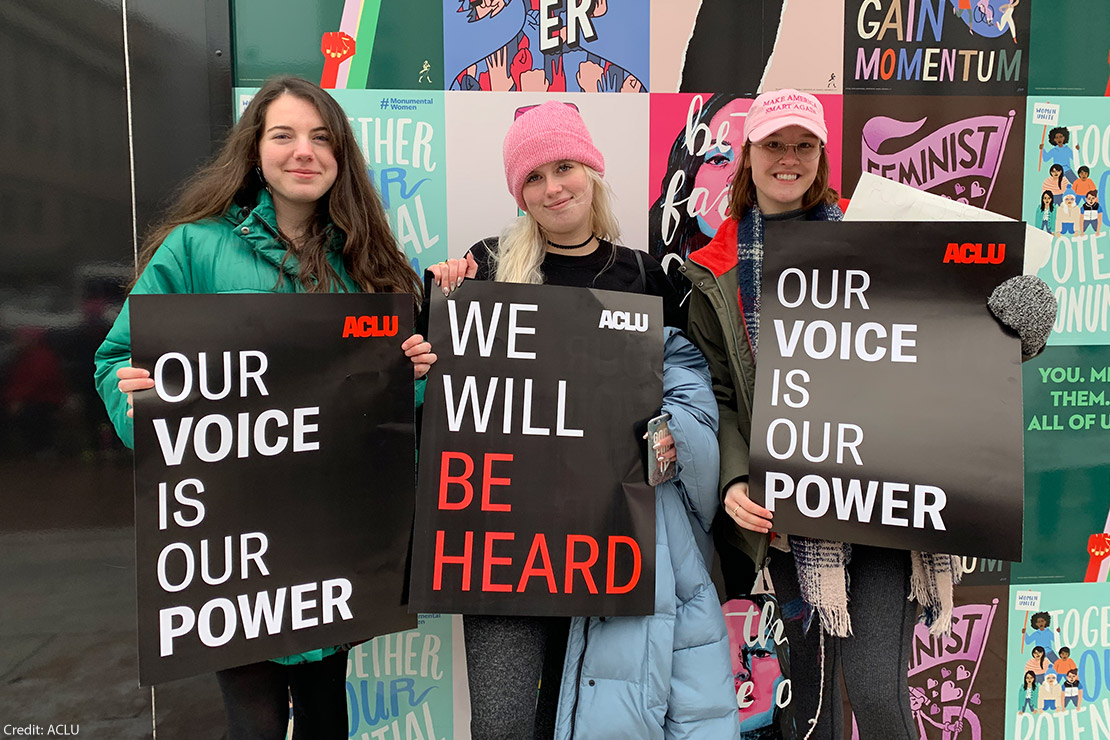
The ACLU has led the way in fighting discriminatory dress codes that reinforce sexist and racist stereotypes in schools and at work. These discriminatory codes target girls, people of color, and members of the LBGTQIA+ community, particularly girls who live at the intersection of those identities. Many students and workers across the county are subject to senseless, sex-based restrictions such as skirts, dresses, and “modest clothing” for women and girls and short hair, pants, and no accessories for men and boys. We successfully challenged a charter school’s “skirts only” rule for girls, which the school adopted based on the belief that every girl is a “fragile vessel.” The school sought to overturn the decision but, in 2023, the Supreme Court left the victory in place. This past year, we also reached a historic settlement with Alaska Airlines to remove all gendered restrictions from its uniform policy for flight attendants.

Across the country, we’ve sought to end the enforcement of discriminatory dress codes in a range of other contexts as well. We’ve fought to end discriminatory dress codes in schools that prevent boys and non-binary students from wearing their hair long, which prevents Native American and Black students, among others, from expressing their cultural and religious traditions. We’ve also worked to end dress codes that penalize student athletes on the girls’ cross-country teams for training in weather-appropriate clothing, as well as those that forbid transgender seniors from attending their high school graduation dressed as themselves.
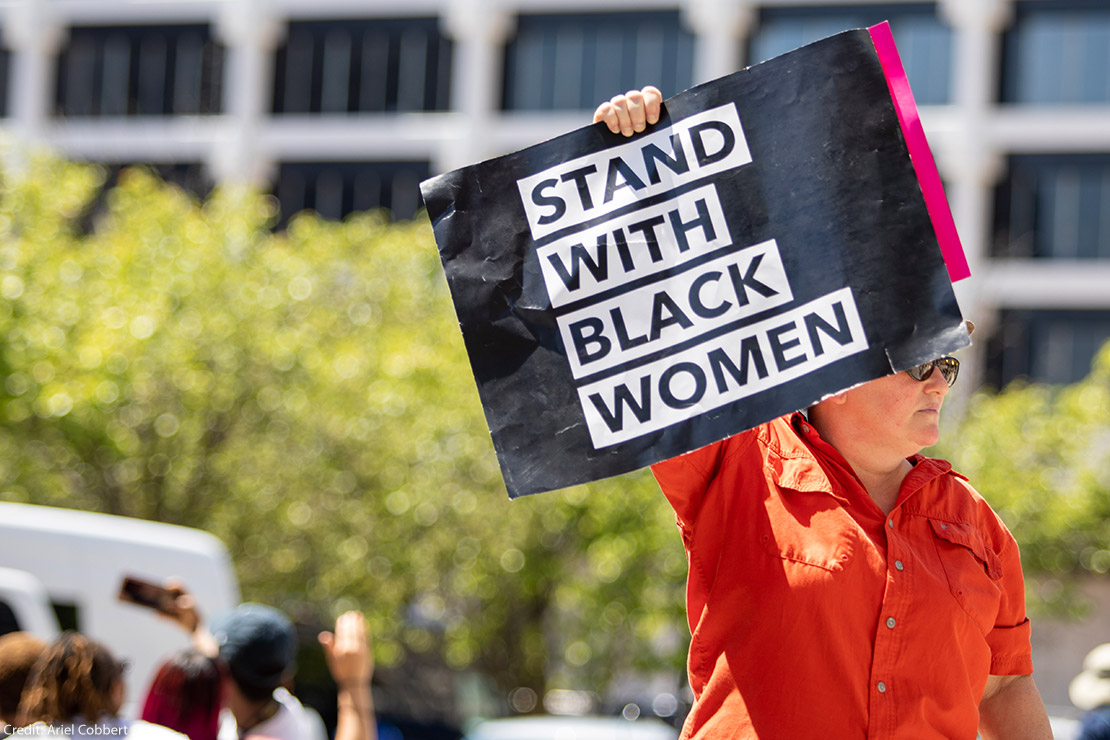
In our fight for housing justice, we have taken on “No-Eviction” policies and other screening policies that disproportionately discriminate against Black renters, particularly Black women. These screening policies block potential renters from housing simply because they are connected to any previous eviction case, even if the case was very old, they ultimately won it, or the legal action against them was unlawfully filed in the first place. Black women are significantly more likely to have eviction cases filed against them by landlords, so these policies in turn impact and destabilize Black women, further perpetuating systemic inequality and segregation. In 2023, we filed two challenges against the use of these screening policies by Chicago-area landlords. These cases were among the first of their kind in the United States and aim to set a precedent for disrupting discriminatory housing practices.
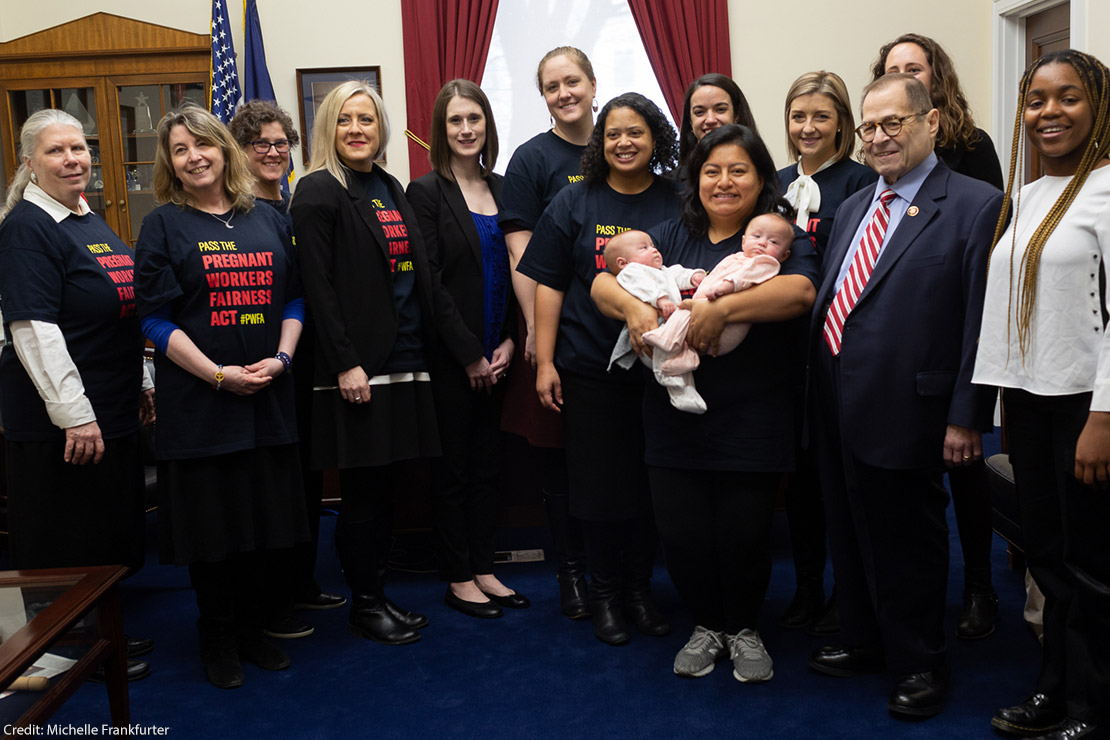
We have long been at the forefront of fighting for the rights of pregnant and breastfeeding workers who experience discrimination in the workplace. Over the past few years, the ACLU was a key advocate for the enactment of the Pregnant Workers Fairness Act and the PUMP for Nursing Mothers Act. These new landmark laws ensure that millions of pregnant and lactating workers have access to reasonable accommodations that allow them to continue working, instead of forcing them to choose between their paycheck and a healthy pregnancy and nursing period. We continue to litigate on behalf of employees who are denied pregnancy-related accommodations and those discriminated against for being pregnant.
As part of our work on behalf of families of color who are disproportionately impacted by the child welfare system, we have been a strong voice in raising awareness about the widespread use of automated tools by local governments to determine which families to investigate – tools that often heighten the risk of disintegration for Black and Brown families in the United States. In 2023, the ACLU published a report on the discriminatory effects of Allegheny County’s “Family Screening Tool,” which could disproportionately flag family members who were Black or had disabilities for investigation. The ACLU’s report prompted in-depth reporting from the Associated Press and an investigation from the U.S. Department of Justice.

While there is still much work ahead of us, our recent victories give us hope for progress toward a more equitable world for everyone, regardless of gender. We will continue the fight for gender justice alongside everyone who has been and continues to be a part of the movement with us.

At the onset of President Biden’s term, in January 2021, he issued an executive order to phase out the federal criminal system’s use of for-profit prisons. This was an important step toward stemming the flow of federal money to corporations that lock people up for profit. The executive order covered both the Federal Bureau of Prisons, which holds people convicted of crimes, and the U.S. Marshals Service, which holds people while they await trial or await transfer to a federal prison after sentencing. However, it left out the federal government’s heavy use of for-profit immigration detention facilities, which are rife with abuse, unsanitary conditions, and overcrowding.
The Bureau of Prisons followed the executive order and has closed all of its for-profit prisons. The Marshals Service has not. An ACLU analysis of documents produced in response to a Freedom of Information Act request shows that, despite the executive order, the Marshals Service continues to hold nearly a third of its entire detention population in for-profit facilities, totaling 20,000 people. It does this by exploiting two loopholes it has created that undermine the purpose of the executive order: to end prison profiteering.
First, the Marshals Service has obtained repeated waivers from the White House that allow it to ignore the executive order and keep five for-profit facilities open. The Marshals Service and White House have not publicized these waivers, and when internal government investigators asked for documentation of these waivers, they were “told that no such documentation existed.”
Second, the Marshals Service has determined that it can continue to pay corporations to operate detention facilities for profit, so long as it uses a city or county government as a middleman. Under this arrangement, known as a “pass-through” agreement, the Marshals Service pays a city or county government, which keeps a portion of the payment and passes along most of the payment to the corporation that runs the facility. An internal government investigation found that these agreements cost the Marshals Service more and provide less control and oversight over operations at its detention facilities.

By using these two loopholes to keep funneling money to corporations that profit from incarceration, the Marshals Service perpetuates the harm that these corporations cause. In the words of President Biden’s domestic policy advisor: “Private prisons profiteer off federal prisoners and are proven to be, or found to be by the Department of Justice inspector general, less safe for correctional officers and prisoners.”
A statistical analysis has shown that as states turn more to for-profit prisons, their incarceration rates increase. This should come as no surprise: for-profit prison companies use the taxpayer money they receive to lobby extensively for increased incarceration. The two largest for-profit prison companies spent $1.7 million and $1.3 million lobbying the federal government alone, with more money going to state lobbying. This does not include the for-profit prison industry’s significant donations to political campaigns and PACs. For example, these two companies each spent a quarter million on President Trump’s 2017 inauguration festivities, and one donated $225,000 to a pro-Trump super PAC.
Congress has taken notice. Nine senators wrote a letter to “express deep concern that the [Marshals Service] appears to be circumventing President Biden’s Executive Order.”
There are a few concrete steps that the Biden administration and the Marshals Service can take now to address these problems and plan for an orderly transition away from for-profit prison companies. First and foremost, they should work together to divert people away from pre-trial detention in a way that protects community safety and ensures people show up for their trials. With fewer people to detain, the Marshals Service will have less need to pay for-profit facilities.
The Biden administration and Marshals Service should also work to find viable alternatives to for-profit facilities for those who remain in detention, where people can be held near their families, friends, and lawyers. People have a right to confer with their attorney regularly to prepare a defense, and numerous studies show that proximity to loved ones and support networks supports better outcomes when people are released from custody.
As they do this, they should be transparent. The Marshals Service should publish its plan to close the five for-profit prisons with which it continues to directly contract. It should develop a plan to stop using pass-through intergovernmental agreements and publish a plan to phase out these detention facilities as well. Spending taxpayer dollars to enrich private corporations and shareholders who run facilities with abusive practices, poor medical care, and unsanitary conditions is a policy that harms incarcerated individuals and creates unsafe working conditions for correctional officers. The Biden administration has called for an end to this policy, it is past time for the Marshals Service to listen.


