Virtual Ministry Archive

Showing posts with label ACLU. Show all posts

Worldwide ACLU Edict : How Your Elected Officials Are Voting on Key Legislation


ACLU: How Your Elected Officials Are Voting on Key Legislation https://ift.tt/cf9Tahb

Democracy is based on the principle that elected officials represent the people – that means they earn recognition when they defend our rights and face their constituents when they threaten our freedoms. And that starts with having reliable information about how members of Congress vote on the issues that matter most.

That’s why, as a part of the ACLU’s new Congressional Scorecard, we have been tracking how all members of Congress voted on key legislation since the start of the 119th Congress in 2025, which has brought on new attacks on civil liberties and civil rights as it coincided with President Trump’s second term. Trump’s second term.

The ACLU scored 12 bills in the House of Representatives and 7 in the Senate in 2025. This included legislation that made the biggest cut to Medicaid since it was created in the 1960s and funneled that money to fund President Trump’s anti-immigrant agenda, bills that threatened free speech, efforts to criminalize health care, and more. Our Congressional Scorecard assigns each member an overall percentage based on the share of votes they cast that align with the ACLU’s position.

Below, we analyze how lawmakers voted on key legislation and how the ACLU supported civil liberties on Capitol Hill.

Congress Pushes Wildly Unpopular Policies

In 2025, Congressional leadership, emboldened by President Trump, took every opportunity to divide our communities, attack the most vulnerable among us, and advance policies. Many elected officials in Congress are far out of line with their constituents on many of the most pressing issues of today.

Take for example H.R. 1, the so-called “One Big Beautiful Bill” that cut hundreds of billions of dollars in funding from Medicaid to supercharge immigration enforcement. This bill was opposed by the ACLU and by the people, too. Poll after poll continues to show that Americans across the political spectrum in states like AK, AZ, GA, ME, NH, NV think President Trump’s immigration policies, backed by his allies in Congress, have gone too far.

There were also two bills that would ban or even criminalize gender-affirming medical care for minors. While both bills narrowly passed out of the House of Representatives, they have failed to advance under Republican leadership in the Senate as most Americans oppose laws that would ban essential health care for transgender youth.

Active Year on Capitol Hill Blocks Harmful Legislation

The ACLU remains very active on Capitol Hill. Last year alone, we hosted 41 congressional briefings, organized 206 constituent meetings with congressional offices, organized 12 lobby days, and sent 54 policy explainers to lawmakers. In addition, we spent countless hours providing expert advice to lawmakers and staff. Backed by our People Power activist program and advocates across the country, the ACLU generated over 3 million online digital actions, petitions, advocacy forms, and messages to legislators – including over 56,000 constituent calls.

As a result of these efforts, the ACLU was able to move key members on issues such as transgender rights and immigrants’ rights. The ACLU took action against six anti-immigrant bills and amendments and helped prevent 83 percent of them from becoming law. Members of Congress, like their constituents, saw the unpopularity of President Trump’s policies. And despite several anti-LGBTQ+ bills being introduced, all efforts to establish new statutory restrictions on gender-affirming care have failed.

We also have a long history of building bipartisan majorities in defense of civil liberties. In 2025, ten Republicans in Congress have voted with the ACLU at least 25 percent of the time and were key to blocking efforts that threatened free speech and regulating artificial intelligence.

Americans Will Hold Congress Accountable

But there is still work left to do. Congressional leadership has started this year by advancing anti-voter legislation that would disenfranchise millions of Americans. Right now, Congress is also considering reforms to rein in ICE amid ongoing pressure from the public. We must continue to make our voices heard.

We have the opportunity to tell our representatives to oppose bills that restrict our rights and freedoms. Join People Power today to stay informed about what Congress is up to and how you can get involved in protecting our rights. Together we will fight and win.

Worldwide ACLU Edict : Rümeysa Öztürk: I Saw the Horrors of ICE Detention Firsthand. It is No Place for a Child.


ACLU: Rümeysa Öztürk: I Saw the Horrors of ICE Detention Firsthand. It is No Place for a Child. https://ift.tt/OjzMgeE

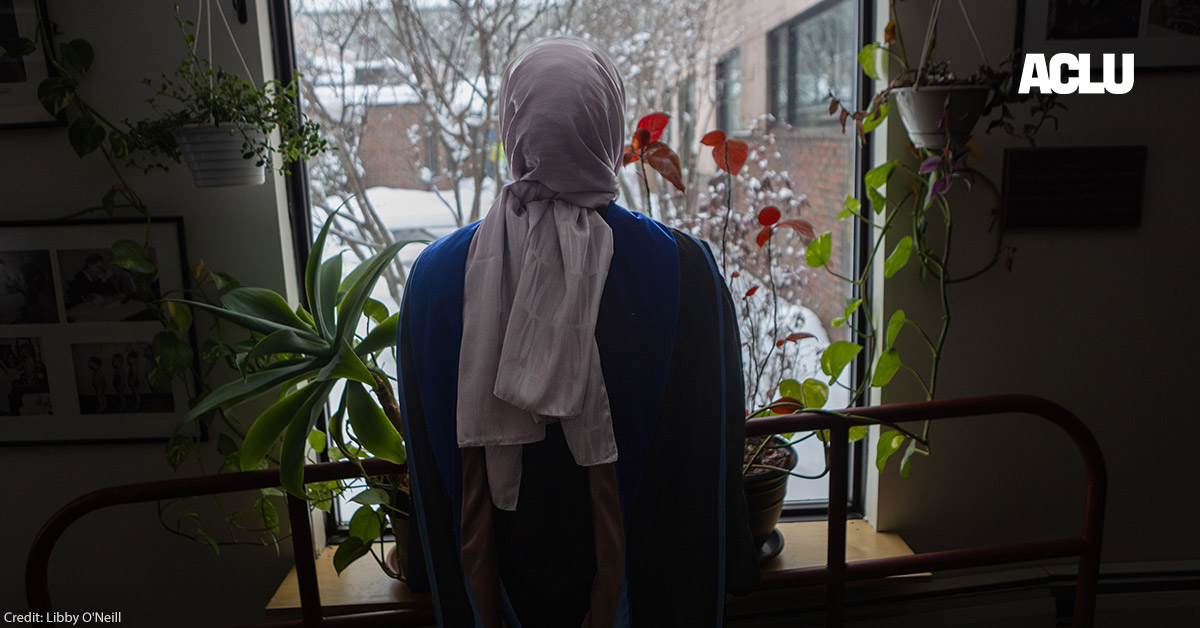
EDITOR’S NOTE: Rümeysa Öztürk was unlawfully detained by ICE agents in Massachusetts in March 2025 for an op-ed she co-authored in the Tufts Daily. She was held in a for-profit detention facility in Louisiana for weeks. She has spent her time after being released working on her dissertation. She now holds a Ph.D. in child study and human development.

Each day, I read more news about children as young as two years old who are detained in a for-profit ICE detention center in Dilley, Texas, away from their friends, schools, and communities. I see reports of handwritten letters from children asking to be released, as they describe the fear they experience day in and day out while in detention. As an applied developmental scientist who spent more than 13 years studying child and youth development, as well as someone who has firsthand experienced the horrors of encountering immigration enforcement and the inhumane treatment and conditions that follow, I am deeply concerned for children impacted by immigration enforcement surges.

There is no shortage of research that demonstrates the connection between family detention and deportation proceedings of children and negative educational outcomes, elevated levels of distress, mental and physical harm, trauma, and decline in multiple aspects of well-being. Currently, approximately 1 in 12 children in the U.S. face risk of deportation of a loved one and the lasting negative impacts on their psychological and physical well-being. Immigration and Customs Enforcement (ICE) has detained at least 3,800 children since mid-January 2025. Of those 3,800 kids, more than 600 unaccompanied children have been put in custody of the Department of Homeland Security (DHS) and were taken from their parents in many cases.

Regardless of my role as researcher, on a human level I am constantly thinking: What do children feel when they first encounter immigration enforcement, who are usually armed and masked? Do their little bodies tremble or freeze? What happens when federal agents take their parents away from them? What does it mean for a preschooler to be detained? What is their crime? Is it being born or, perhaps, seeking asylum? What sense of childhood remains when immigrant children are detained in inhumane conditions?

What I experienced as an adult paints enough of a bleak picture. As a 30-year-old, I was unlawfully abducted from the street by masked and armed agents for being a co-author in a school op-ed at Tufts Daily that advocated for Palestinian human rights. I was sent to a for-profit ICE prison thousands of miles away from school and the community I’d built in Boston, not to mention thousands of miles away from my family in Turkey. The experience has been profoundly harmful to me, even as an adult. Despite the immense care, love, and support from my community, there has still not been a single day when I have felt safe walking the streets again — not even on my way home or to school. It’s not just the moment of abduction that is terrifying, but also where one will go and the inhumane treatment they may face that cannot be considered developmentally appropriate for any single child. Research suggests that interacting with the immigration system poses harm to children’s long-term development. Previous personal accounts indicate that suffering continues throughout the lifetime.

As I continue to heal from my own experience in a for-profit ICE prison, I can’t help but wonder if children detained will ever feel safe again. I worry about how they will grow up and carry this adverse experience for a lifetime. Interacting with immigration enforcement not only poses developmental risk to children detained in those shameful places for longer periods of time, but also to children (including citizen children) whose parents are detained at the for-profit ICE prisons. In the for-profit prison where I was unlawfully detained, I met countless mothers who cried everyday longing for their children. I met mothers in the deportation process whose hearts were shattered when their children were taken into foster care. I listened as some mothers tried to speak with their children on tablets, only to have officers order them to close the tablets or take them away, leaving their children in tears. I met mothers whose babies were taken from them just weeks after birth. I met with a pregnant mom waiting for her deportation. Her children are American citizens.

But these cruel immigration raids aren’t only harming immigrant children or children with immigrant parents. The experience also affects classmates who are waiting for their detained peers to return. These same children are trying to make sense of what they see on news reports of kids being detained, of disappearing classmates, students, and adults on the street during ICE raids. Children and their teachers are being taken from their communities, leaving classrooms and communities in fear. There are accounts of BIPOC and immigrant children being bullied at school.

We must all ask ourselves: is this really the world we want for our children — one where they are afraid to go to school, home, hospitals, neighborhoods, playgrounds, museums, and libraries for fear of immigration detention?

I hope there is an end to family detention so that these parents and young children can proceed with their cases while living in their communities, going to school, getting medical treatment, and playing with their friends. Too many children are facing detention because of ICE’s rampant operations. But detention is no place for a child. It’s cruel and unnecessary. We can all take action, whether that means raising our voices to demand an end to child detention, or simply educating ourselves on how current immigration policies are impacting children.

Worldwide ACLU Edict : Congress Must Rein in ICE to Improve the State of the Union


ACLU: Congress Must Rein in ICE to Improve the State of the Union https://ift.tt/qmRuEQa

In times of war and peace, prosperity and depression, American presidents have complied with their constitutional obligation to deliver to Congress an update on the nation.

It’s a hallowed tradition, but this year, due to President Donald Trump’s own actions, the state of this union is bleak. However, the good news is that We the People are showing tremendous courage and pushing back to protect each other.

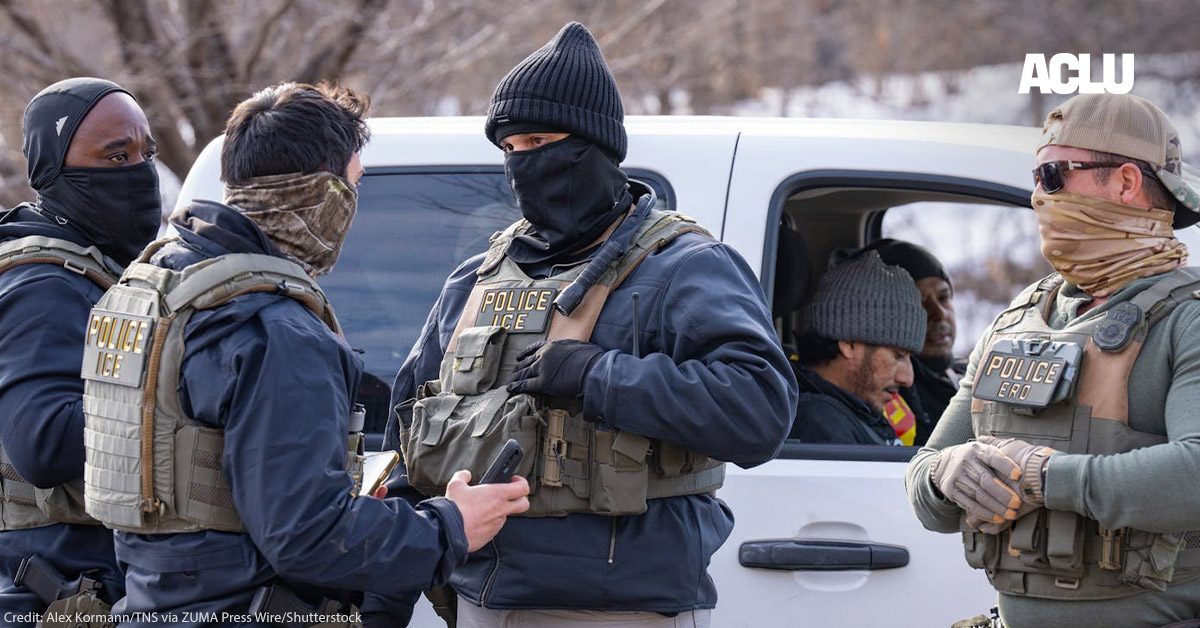
Our country approaches a crossroads at ever-increasing speed, pushed to this brink by the Trump-Vance administration’s lawless immigration force. The administration says U.S. Immigration and Customs Enforcement and Border Patrol are pursuing the president’s cruel mass deportation agenda. But the implications are far broader, causing violence, chaos, and civil rights abuses at an accelerating rate. Around the country, federal agents have descended upon communities, targeting citizens and noncitizens alike, going after young children and families.

Department of Homeland Security Lawlessness Affects All of Us

For months, the Trump administration has encouraged federal agents to commit horrifying abuses claiming they have "absolute immunity.” The results have been devastating: Renee Good, Alex Pretti, Ruben Ray Martinez, and Keith Porter Jr. are dead at the hands of federal agents. Another 39 people have died in ICE custody in the second Trump administration, including 8 just this year. And it’s only February. In addition, ICE has detained at least 3,800 children under this administration.

Federal agents have masked up, demanded to see people’s papers, scanned their faces, and taken people off the street simply for “looking” Somali, Latino, or Asian. Citizens have been dragged from their homes in their underwear, thrown in unmarked vans, driven to detention centers in federal buildings, shackled at the ankles, and denied water. Communities in Minneapolis, Chicago, Charlotte, D.C., New Orleans, Los Angeles, and beyond live in fear — their anxieties justified by accounts of federal agents dragging children from their beds in the middle of the night, stalking families outside hospital emergency rooms, staking out schools, and following kids home.

None of this can be justified as pursuing people who pose a serious public safety theat. According to a leaked internal DHS document, fewer than 14 percent of people detained have been convicted of a violent crime. Instead, these tactics are calculated to inflict terror on anyone not born in the U.S., regardless of their immigration status, as well as on their families and communities.

The Department of Homeland Security (DHS) agents, acting more like a secret police force from a totalitarian country than from a nation of laws, have also targeted people exercising their First Amendment rights. People who record federal agents, peacefully protest, offer mutual aid in their communities, or even pray in front of ICE facilities are being sprayed directly in the face with tear gas and pepper spray, shot with pepper balls, surveilled digitally, and followed home. Many have suffered injuries, had property damaged, and experienced severe trauma.

 Communities Pushed Back. Congress Should Follow. 

Despite these direct assaults on our constitutional freedoms, we are also seeing the fortitude and resilience of our communities. Minnesotans have turned out week after week — sometimes in sub-zero temperatures and always at personal risk from violent federal agents — to document and peacefully protest the attacks on their neighbors. And their courage has already forced the administration to retreat. The administration has said they’re pulling back agents from Minnesota, although they have not even suggested they are stopping their unlawful policies and practices. The Border Patrol’s ringleader, Greg Bovino, was demoted. Some agents have admitted to lying about agents’ violence.

Public opinion is firmly against Stephen Miller’s dystopian police state and the federal government’s violence overall, and we’re making it known. Nearly 300,000 people joined the ACLU to send messages to their members of Congress, urging them to reject any bill that would fuel ICE and Border Patrol’s lawless operations.

Thanks to the powerful advocacy of people across the country, Congress recently refused to fund DHS without new restrictions. Now, the administration is grudgingly acknowledging a need to negotiate further limits on ICE.

Congress has the power to rein in this rogue agency. Congress must protect our rights by ending ICE's rampant racial profiling and halting the construction of huge human warehouses. It must stop ICE from putting small children behind bars and push for accountability so victims of abuse can get justice. Congress must mandate transparency, so federal agents take off their masks, turn on body cameras, and fully cooperate with any federal, state, and local investigations into wrongdoing.

These important steps would serve as just a downpayment on dismantling the lawless and bloated secret paramilitary force, with a budget bigger than the Marine Corps’, currently terrorizing our communities. We’ve seen the cost of Miller’s hate-fueled terror campaign, from rights violations to the suffering of small businesses because their employees are targeted. People are afraid to get urgent medical care, even to give birth. Classrooms are half-empty. Witnesses to crimes are afraid to come forward. Immigrant family members, friends, and neighbors are afraid to leave their homes and take part in daily life — unable to make the many contributions to our communities we have long counted on.

Ultimately, we need to remake an immigration system that roots enforcement in the rule of law, creates a pathway to citizenship for those who have been longstanding residents, and celebrates the ways immigrants make our country stronger rather than scapegoating and dividing.

You can count on President Trump telling us tonight that the state of the union is the strongest it’s ever been. He may be right, but not in the way he thinks. His attacks are backfiring because we know that our union is strongest when we defend the rights of all of us. It’s up to us to create a stronger, better America, and it starts with Congress reining in the president’s rogue DHS paramilitary.

Worldwide ACLU Edict : Into the Black Hole: Navigating the Center of Trump’s Deportation Force in Louisiana


ACLU: Into the Black Hole: Navigating the Center of Trump’s Deportation Force in Louisiana https://ift.tt/L3DsXCg

EDITOR’S NOTE: Nora Ahmed joined the ACLU of Louisiana as Legal Director in 2020. She has helped to build the organization’s policing, immigration, voting rights, and First Amendment dockets from the ground up. Under her leadership, the Justice Lab program has secured nearly $1.5 million in settlements for police brutality victims and changed Louisiana’s statute of limitations after two Supreme Court cases, expanding constitutional protections for thousands of Louisianans. She’s now leading the newest iteration of Justice Lab focused on freeing immigrants wrongfully detained in Louisiana’s carceral system.

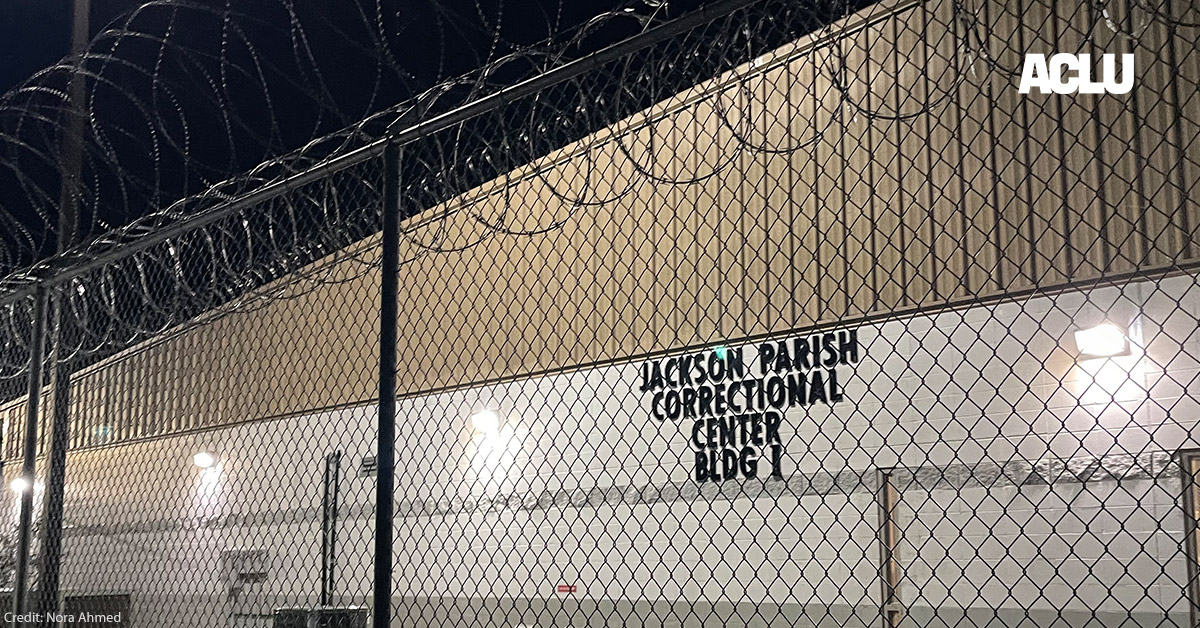
Last year on October 30, I drove six hours to an immigration detention facility at night, looking for my 18-year-old client, Juan. U.S. Immigration and Customs Enforcement (ICE) kidnapped Juan, who uses a pseudonym due to age and privacy concerns, off the street in New York while he was on his way to work. ICE then sent him to Louisiana where he languished in the Jackson Parish Correctional Center for nearly three months. Driving up to the facility at 11 p.m., I had a federal court order in hand, signed by a judge who had ordered Juan’s immediate release. But when I showed up, the correction officers refused to set him free. So, in the middle of the night, our partner attorneys and I filed a motion alleging ICE was disobeying the court order. The next morning, we secured Juan’s freedom.

Here in Louisiana, we often refer to the state as the “black hole” of immigration detention, where people simply disappear. According to some estimates, over 60,000 people have been trapped by this system annually. Immigrants detained in Louisiana face abhorrent conditions, along with a lack of access to legal support. It took a while for our team to get to the point of trying to free a client in the middle of the night in rural Louisiana. But against innumerable odds, we have been able to release dozens of people from immigration detention centers here over the years — through parole applications, advocacy, litigation, assistance for people representing themselves in court, and habeas petitions. A habeas petition asks the federal court to order the release of someone in immigration detention who has been wrongfully detained. While thousands who deserve justice remain left behind, the ACLU of Louisiana is expanding our work to connect them with crucial immigration services and obtain their freedom.

Building immigration work from the ground up in Louisiana

Through years of intentional relationship building, my colleagues and I were able to gain a foothold within this black hole. We now understand how it works in ways we did not a few years back. As the Trump administration has cracked down on immigration and used Louisiana as the center of its mass deportation campaign, our foothold has allowed us to expose injustices from within, while continuing to free wrongfully detained immigrants.

When I joined the ACLU of Louisiana during the COVID-19 pandemic in 2020, I was tasked with building out our immigration practice. A critical first step in my role as legal director was to seek out the people already doing legal support on the ground, including the Southern Poverty Law Center (SPLC), Immigration Services and Legal Advocacy (ISLA), and other local advocates.​ While working with these groups, and the current Director of Strategic U.S. Litigation at the Robert & Ethel Kennedy Human Rights Center, I quickly learned that local organizations were stretched thin. In fact, when we first began our immigration work at the ACLU of Louisiana, the actual daily population of people detained and the number of detention centers operating in the state was unclear. The incredibly remote locations of most detention facilities in the state, and how often authorities transported people from one detention center to another, only made things harder. I now know it can take at least three hours, and sometimes more than seven, to get to certain facilities depending on traffic and road closures. At this point, I have been to every single detention center in our state multiple times.

To get to this point, it was critical to gain access to all the detention centers operating within our state. To do so, we developed Know Your Rights packets and presentations that we submitted for approval to the Department of Homeland Security (DHS). That rigorous approval process ultimately provided us with access to all operating detention centers in the state by 2022. By presenting critical legal information to those detained, we learned that there were thousands of individuals detained in Louisiana without representation, a much higher number than we anticipated. This is not suprising considering Louisiana operates ten ICE detention centers, each of which falls within the jurisdiction of the ICE Field Office in New Orleans. The office also oversees detention centers in Mississippi, Alabama, Arkansas, and Tennessee. Louisiana alone is second only to Texas in detaining the highest number of immigrants in the country.

The state is also home to the only detention center attached to an airport in the country: the Alexandria Staging Facility. Tens of thousands of people get deported from, or pass through, the staging facility annually. Many, if not most, are never to be seen or heard from again. When a person arrives at the staging facility, the government has already deemed them deportable, which means there is little recourse to be had. When ICE sends immigrants there, attorneys and family members struggle to obtain the most basic information about how their client or family member ended up there and, most importantly, how they can get out.

Against this bleak backdrop, we became familiar faces to the wardens and correctional officers in charge of these ICE facilities, and with the individuals heading up the New Orleans ICE Field Office. Having access allowed us to be a resource for detained individuals. While it did not ease the sense of injustice immigrants felt in the detention centers, it helped people detained understand their legal options and pathways to release, if any.

As part of the ACLU of Louisiana’s immigration work, we prioritized visiting clients consistently, staying on site all day, and interacting with facility staff. That type of lasting presence brings people together, as long as all parties are respectful of one another’s work. The Field Office and the facilities came to understand that we would be respectful of their constraints if they could accommodate us. As we conducted Know Your Rights presentations in 2022 and 2023 at every detention center across the state, I was the point person on our team liaising with the facility. For that first year, I was there, every time, constantly conferring with detained individuals, facility staff, and with ICE.

Expanding immigration work despite surging cases under the Trump administration

Prior to the elections in 2024, we published our initial report on the Louisiana immigration system: “Inside the Black Hole.” It outlined the conditions we saw at these detention centers firsthand: abusive and discriminatory treatment; lack of access to basic hygiene and food; denial of care for medical emergencies, and more. Once Trump took office again, detention cases surged and conditions only worsened. Armed with years of relationship building and research, we were prepared. Our team was uniquely positioned to quickly get ahead of the surge and free unjustly detained individuals. This included high-profile cases like Mahmoud Khalil, and lesser-known cases like Juan’s. We have recently updated the report with new research explaining what detention looked like in Louisiana under the first year of the current Trump administration.

We hope our work highlights two crucial lessons for other legal practitioners. Firstly, be prepared for detained immigrants to end up in Louisiana. The Alexandria Staging Facility is the spoke in a wheel of mass detentions and deportations. Secondly, investing early in relationships and infrastructure is crucial for immigration providers, especially to gain access to facilities and get the work done from within. When there’s a crisis, it is often too late to build relationships from scratch.

The detention system in Louisiana may still function like a black hole in many ways, with no information coming in or out. But years of patient relationship building, legal advocacy, and documentation have created a blueprint for how we can pull people out of this opaque system. We are working to take that knowledge to others, through our Justice Lab: Immigration project, a volunteer corps that mobilizes attorneys barred nationwide to provide free legal habeas representation to detained immigrants in Louisiana. Our initiative partners overworked immigration attorneys with trained federal litigators to provide crucial habeas support. To answer the call of thousands in need of legal assistance at this critical point in our nation’s history, we aim to build a bench of at least 50 federally-barred litigators to work on cases in Louisiana, representing individuals from across the country detained within the state.

Our work is far from over, but these strategies can be replicated and expanded to protect more people from disappearing into detention. And while our own work is limited to Louisiana, residents across the country can contact their elected officials and urge them to end DHS abuses and hold ICE accountable. Learn more about our Justice Lab: Immigration project, spread the word, and if you are a fit, consider volunteering. Attorneys interested in volunteering can contact the ACLU of Louisiana.

Worldwide ACLU Edict : One Year In: Defending the Constitution Under a Second Trump Administration


ACLU: One Year In: Defending the Constitution Under a Second Trump Administration https://ift.tt/ETJKe05

One year ago, President Donald Trump was sworn in for a second term. Within hours of his inauguration, it was clear that he and his administration would, once again, test the Constitution and the willingness of our nation’s institutions and people to defend it. However, what stood out most to us during the last year has been the volume, pace, and persistence of the second Trump administration’s assault on many of our most fundamental rights and freedoms. There were multiple flashpoints throughout the last year, as the administration’s “shock and awe” strategy yielded a sustained and aggressive assault on civil rights and civil liberties resulting in 225 executive orders signed (as of December).

Near daily efforts to dismantle civil rights and civil liberties protections, intimidate marginalized communities, and upend the rule of law threatened to normalize the previously unthinkable. At the U.S. Supreme Court, blows to trans rights and free speech set dangerous precedents. At the state level, attacks on core protections for reproductive freedom and voting rights persisted.

Although we faced an incredibly bleak landscape for civil rights and civil liberties, the ACLU did not relent because we were ready on day one and able to meet the Trump administration’s shock and awe strategy with an even more shocking and awesome response. Months before the 2024 election, we studied President Trump’s campaign promises and Project 2025, and, in a series of public memos, laid out the civil rights and civil liberties threats a second Trump presidency would pose. We anticipated the renewed attacks on immigrants and other vulnerable communities, expanded domestic use of federal force, and systematic efforts to suppress dissent.

Yet, defending the Constitution in this environment has required more than advance preparation and a sense of urgency. It necessitated an unshakable belief that democratic norms are worth fighting for even when the pressure seems unyielding. That’s why we mobilized our lawyers, advocates, organizers, storytellers, and supporters to delay unconstitutional policies before they took effect, dilute their reach when full blockage wasn’t immediately possible, and defeat them through courts, public pressure, and sustained organizing.

One year in, our work is guided by a simple principle: we are only in a constitutional crisis if we allow ourselves to be.

We Fought — and Won — in Court

Mere hours after taking office, President Trump issued a blitz of executive orders and policy directives that immediately threatened birthright citizenship, trans rights, freedom of speech, and voting rights. Our response reflected a core constitutional principle: rights endure not because leaders respect them, but because people and institutions insist on enforcing them.

  • Birthright Citizenship. Two hours after President Trump issued an executive order attempting to end birthright citizenship — a constitutional guarantee for more than 150 years — the ACLU sued. When a Supreme Court ruling threatened partial enforcement of the order, we shifted tactics, filing a class-action lawsuit that protected more than 129,000 children from harm. This spring, the ACLU’s National Legal Director, Cecillia Wang, will argue the case before the Court that the administration’s attempt to end birthright citizenship violates the 14th Amendment.
  • Alien Enemies Act. We also sued the Trump administration over the president’s unlawful and unprecedented invocation of a centuries-old wartime act, the Alien Enemies Act, to accelerate mass deportations. This spring, the ACLU scored a critical legal victory with the U.S. Supreme Court ruling that individuals must be given due process to challenge their removal under the Alien Enemies Act. Additionally, in December, a federal judge ruled that the Venezuelan men sent to the CECOT prison in El Salvador were denied due process and ordered the government to facilitate their return or offer hearings compliant with due process.
  • Free Speech. The ACLU acted swiftly to secure the release of international students and scholars Mahmoud Khalil, Rümeysa Öztürk, Mohsen Mahdawi, and Dr. Badar Khan Suri who were detained by the Trump administration for their pro-Palestinian speech. Claiming their speech threatened U.S. foreign policy, the government sought to intimidate dissent by using immigration enforcement to punish lawful political expression. In addition to securing the students’ release, the ACLU was able to protect them from immediate deportation while their cases move through the courts, reaffirming that political advocacy is not grounds for exile.
  • Troop Deployment. We took action when federal troops and National Guard units were sent to cities including Los Angeles, Chicago, and Washington, D.C., under the pretext of controlling protests. Through lawsuits, friend-of-the-court briefs, and aggressive transparency demands, we forced scrutiny of these actions and constrained their scope so that this grave abuse of power will never be normalized. Thanks to a string of court victories prohibiting deployments, including in Illinois v. Trump, as well as sustained political opposition, President Trump announced on New Year’s Eve that he was abandoning efforts to use the National Guard in Los Angeles, Chicago, and Portland.
  • Equal Protection. When President Trump signed an executive order directing federal agencies to withhold funds from medical providers and institutions that provide gender-affirming medical treatments to anyone under 19 years old, we challenged the order. A court then temporarily blocked the Trump administration from enforcing it.

The ACLU's legal docket comprises 239 legal actions and 139 lawsuits. More importantly, a majority (64 percent) of our cases succeeded in delaying, diluting, or defeating the Trump administration's policies. As a result of our’s and other organizations’ efforts, the courts continue to be a check on the power of the presidency, just as our Constitution demanded.

We Mobilized Communities and Built Power

As proud as we are of our work in the courts, we know that we will not be successful unless millions of individuals demand change. Across the country, ACLU affiliates and partners trained more than 84,000 people on their rights and enrolled 180,000 individuals in our People Power activist program. When protests were met with militarized responses, we rapidly expanded Know Your Rights training nationwide, equipping tens of thousands of people to demonstrate safely and lawfully. We also mobilized our supporters and members of Congress to advocate on behalf of immigrants facing neglect and abuse in detention centers.

In what became one of the most visible free-speech confrontations in recent decades, political pressure led ABC to suspend Jimmy Kimmel Live! after FCC leadership threatened broadcast licenses over a monologue they found objectionable. The ACLU mobilized more than 500 prominent artists and more than 50,000 supporters to sign an open letter criticizing Trump administration’s attempts at censorship. Within hours of our mobilization, the show returned to air — stopping the censorship before it could harden into precedent.

The Road Ahead: 2026 and Beyond

As we enter 2026, the stakes feel as high as ever. In coming months, the courts will make decisions that affect civil rights and civil liberties and determine whether marginalized communities can fully participate in public life for years to come. This year also marks the 250th anniversary of the Declaration of Independence — a moment that reminds us of the centrality of liberty and equality to the founding of our nation.

Having led the ACLU through eight presidential administrations, I’ve learned one thing for certain: progress is never permanent, and setbacks are never inevitable. Yet, our work endures. What the ACLU does over the next three years and how well we do it will play a role in shaping the course of American history.

This is because democracy doesn’t defend itself — people do. And together, we will keep showing up.

Worldwide ACLU Edict : Executions Spiked in 2025, but the Death Penalty Is Still Losing Ground


ACLU: Executions Spiked in 2025, but the Death Penalty Is Still Losing Ground https://ift.tt/UXsOrBE

For death penalty opponents, the dramatic spike in executions last year was truly horrifying. After several years of no more than 25 executions, there were 47 executions in 2025, nearly double the years prior. This included the executions of people with intellectual disability, powerful claims of innocence, and whose trials were marked by profound unfairness and racism.

Even as executions surged, 2025 was also a year of continued progress in efforts to abolish the death penalty.

For years, the number of executions reflected decisions made decades ago: cases tried by prosecutors who were more likely to seek death and decided by juries who were more willing to hand down a death sentence. They are not a measure of where most Americans are today. When we look at modern indicators – public opinion, new prosecutions, and jury verdicts – the death penalty is losing its legitimacy.

Even as executions surged, 2025 was also a year of continued progress in efforts to abolish the death penalty.

New death sentences and public support for the death penalty are continuing a historic decline. Thirty years ago, juries returned new death sentences in over 300 cases. In 2025, they did so in only 23 cases. According to Death Penalty Information Center, more than half of the juries in 2025 recommended life verdicts. This is particularly remarkable considering how slanted capital juries are towards the death penalty. A process called death qualification ensures that jurors who are opposed to the death penalty and will not consider voting for life are excluded from serving on capital juries. As a result, juries areless diverse and more likely to convict and sentence someone to death.

That the death penalty has continued to decline despite most pro-death juries is a major feat and also confounding without looking into the larger context of pro-death sentencing. In his first term, President Donald Trump carried out an outrageous execution spree, executing 13 people before leaving office in 2020. President Joe Biden then issued large scale commutations to avoid another slate of executions. Voices from across the political spectrum celebrated President Biden’s historic act of clemency. However, last year, on day one of President Trump’s second term, he announced his pledge to do everything possible to restart and expand the death penalty.

When we look at modern indicators – public opinion, new prosecutions, and jury verdicts – the death penalty is losing its legitimacy.

Florida Governor Ron DeSantis eagerly latched onto President’s Trump’s direction to embrace executions. After directing just one execution in 2023, Governor DeSantis ordered 19 in 2025. Advocates in California have publicly called on Governor Newsom to answer this threat by ensuring that this kind of death spree will not happen in his state and commuting California’s row, which is the largest in the country.

That's why at the ACLU, we're working to end capital punishment in courtrooms and statehouses across the country.

Trump and DeSantis’ focus on the death penalty shows how, despite public opinion, a few powerful individuals can promote pro-death penalty logic in our legal system and across the country. An administration set on cruelty over justice has only energized the resistance and made the problems with the death penalty impossible to ignore. After 50 years of reform, the death penalty’s innocence problem has proven intractable. The more than 200 U.S. death row inmates have been exonerated since 1973, a rate of about one exoneration for every eight executions. Key causes for false conviction include official misconduct, false accusations, faulty forensic "junk science," inadequate legal counsel, and racial bias.

That's why at the ACLU, we're working to end capital punishment in courtrooms and statehouses across the country. Each execution this year further exposes what the system really is and only strengthens the movement that will end it.

Worldwide ACLU Edict : Inside an ICE Detention Center: Detained People Describe Severe Medical Neglect, Harrowing Conditions


ACLU: Inside an ICE Detention Center: Detained People Describe Severe Medical Neglect, Harrowing Conditions https://ift.tt/0vCZOKU

When U.S. Immigration and Customs Enforcement (ICE) detained Fernando Viera Reyes, his first concern was deportation. His second: prostate cancer.

“It’s one thing being healthy and going through that, but now there’s no medical attention,” Viera Reyes said. “I talked to guys who had been in detention. One guy said you’re not going to make it. You’re going to suffer.”

Viera Reyes is among seven people detained by ICE who sued the Trump administration on November 12 over inhumane conditions at the privately owned California City Detention Facility. The plaintiffs filed their lawsuit with the support of the ACLU, California Collaborative for Immigrant Justice, Prison Law Office, and Keker Van Nest & Peters as a class action representing all people detained at California City. They cite punishing conditions, enforced isolation, neglect of people with disabilities, denial of access to counsel, and, as in Viera Reyes’ case, the facility’s terrifyingly inadequate medical care. ICE’s neglect of Viera Reyes’s medical condition is so severe that he filed an emergency motion.


Medical Neglect at ICE Detention Center

While he was detained in a different California immigration detention center in 2024, Viera Reyes was in agonizing pain, and had blood in his urine and stool. He underwent multiple tests that showed signs of prostate cancer. Viera Reyes has since been in an endless limbo of trying to get a final test: a biopsy to diagnose the cancer, so he can receive prompt treatment.

Detention administrators failed to get him that biopsy before he was transferred to California City Detention Facility, the largest immigration detention center in the state, in August 2025. Since his transfer, Viera Reyes’ barriers to treatment and painful uncertainty regarding his health have worsened. Not only has ICE thwarted his attempts to get a biopsy, Viera Reyes also cannot access the medication he needs to manage symptoms. He has had difficulty seeing a doctor, let alone a specialist. ICE also did not send his health care records with him when he was transferred from another ICE facility to California City, further delaying his treatment. At this point, he has reason to believe his cancer has spread.

Since Viera Reyes arrived at California City, his health has gotten worse. He stays in bed more than he used to. It’s difficult for him to use the bathroom without feeling pain and discomfort, especially without medication. Lately, a pulsating feeling has intensified.

“I was in prison for over 30 years,” Viera Reyes said. “The conditions at California City are worse.”

At least in prison there were fewer barriers to access medical care than he has faced in ICE detention. He was also able to work out, participate in classes and go to church. Now, all he can do to distract himself is watch television. “I always worry. My mind right now is racing,” he said. “We’re just stuck and the only thing that works a lot is our mind, the anxiety.”

Because the levels in his blood work that indicate illness are escalating, Viera Reyes has advocated constantly for his own wellbeing by putting in multiple emergency requests to see a urologist, but his requests have been ignored. When he reported the pain he was experiencing and asked for medication, the doctor prescribed him Vitamin C. Others told him to buy Tylenol from the commissary.


ICE Detention Center Violates Immigrant Rights and Basic Needs

Despite the egregious medical neglect Viera Reyes is experiencing, his story is just one among the hundreds of people detained at California City. Led by the people detained, the lawsuit unveils the myriad ways that ICE and the Department of Homeland Security fail to accommodate basic human needs for the people in their care.Fernando Gomez Ruiz, another person who is suing ICE alongside Viera Reyes, was repeatedly denied insulin, leading to elevated blood sugar levels. He also has an ulcer on his foot that he was not getting proper treatment for. Another plaintiff, Yuri Alexander Roque Campos, could not get his heart medications, even though he had two emergency room visits as soon as he arrived at the facility. The emergency room doctor told the facility that he urgently needed to see a cardiac specialist within 72 hours. He is still waiting for that specialist appointment three months later.

Plaintiffs in the lawsuit also cite excessively restrictive and punitive conditions. For example, Gustavo Guevara Alarcon was placed in solitary confinement for asking to finish his shower.

“Sometimes it feels like they’re treating us like prisoners, but we’re not,” Viera Reyes said. “It’s like they want us to act like prisoners. They want us to be hostile, even for medical reasons, banging on the door and yelling.”

In addition to the severely broken medical system at California City, people with disabilities are denied basic accommodations, such as sign language interpreters and wheelchairs. One plaintiff in the lawsuit who is Deaf and only speaks in American Sign Language, Jose Ruiz Canizales, has only interacted with a sign language interpreter by the facility once, via video. It’s made him feel completely isolated. When he tried to communicate with staff, they would often shrug their shoulders, walk away, or laugh at him.

“So often what happens in a detention facility behind locked doors and barbed wire is invisible to the public,” said Kyle Virgien, senior staff attorney at the ACLU National Prison Project. “It's really important that people know what's being done by our government in our name.”


Detained People Describe Punitive Treatment and Harsh Conditions

The facility holds people in small concrete cells the size of a parking space for hours on end without adequate clothing, food, or water. They deny people basic medical care, disability accommodations, and access to their lawyers and loved ones. Sewage bubbles up from the shower drains, and insects crawl up and down the walls of the cells in the decrepit facility. Officers threaten people who speak out against the abusive conditions with violence and solitary confinement, which they use excessively. Temperatures are frigid. Some wear socks on their arms as sleeves to stay warm.

California City previously operated as a state prison in the middle of the Mojave Desert managed by the California Department of Corrections and Rehabilitation. ICE contracted with the for-profit company CoreCivic to re-open the prison as an immigration detention center this year. It can hold up to 2,560 immigrants in the facility. Since its re-opening, it has come under intense criticism, with people detained at California City describing the facility as a “torture chamber,” and community members expressing outrage over its deplorable conditions. Detained people also have engaged in numerous sit-ins and hunger strikes, including in mid-September, when over 100 people across several housing pods engaged in collective action to demand an end to many of the abuses the lawsuit challenges.

“It's important to remember we lawyers have the freedom to bring this lawsuit without facing many personal consequences,” Virgien said. “But for the people on the inside, they are standing up against the government while they are under complete control of the government. So the fact that they're willing to stand up even though they might face retaliation or harm is just truly impressive. I'm so honored to be able to fight alongside them.”


Immigrants Detained Struggle to Maintain Hope in the Face of Deportation and Mistreatment

While some have been empowered to fight back, pervasive fear and suffering have driven others to abandon their legal rights and agree to deportation.

One man at California City attempted suicide by hanging. He remains anonymous in the lawsuit. Another plaintiff, Sokhean Keo, who was friends with that man, saw his body hanging in the cell. The man survived and was transported to receive medical care. California City staff did not offer mental-health services to the people who had witnessed his suicide attempt. Instead, staff disciplined anyone who had not returned to their cells after the incident, people who remain haunted by the image of their friend’s body hanging in his cell.

Viera Reyes had heard that the man left a note that said he would rather die in America than be deported. “It triggered something in my mind like, ‘Wow, he has a point.’ I put myself in his shoes, because I know what’s going to happen to me if I get deported. But you start thinking about your family.”

At least two other detained people have attempted suicide, and others believe the number is higher. The desolation and desperation has rattled Viera Reyes. He said he tells other detained people in the facility: “Faith is going to have to be your base. Stand on that and believe that something is going to change,” he said. “I know I’m going through pain and I know they’re not doing what they’re supposed to do, but we have to have determination.”

Worldwide ACLU Edict : Our Holiday Book Guide for Justice-Minded Readers


ACLU: Our Holiday Book Guide for Justice-Minded Readers https://ift.tt/VNK7Y5h

For nearly a century, the ACLU has defended the freedom to read and to think for every American. As we approach the holiday season, we’ve selected a list of books about civil liberties, fitted perfectly with some of our most popular products to make the perfect gift for family members and friends.

This holiday season, we’re celebrating the power of stories with a curated collection of books, paired with unique items from the ACLU Shop, such as our banned book collection, aprons, tote bags, and more. Whether you’re gifting a thought-provoking read or a statement-making accessory, each purchase supports the ACLU’s mission to protect free speech and the right to learn.

Since 2021, thousands of book titles have been challenged or removed from school libraries, often targeting BIPOC authors, LGBTQ+ creators, and other marginalized voices. These efforts to ban books and restrict discussions, especially on race, gender, sexuality, and systemic injustice, are both unlawful and a serious threat to our right to learn.

Our series, “ACLU Reads,” lets you join our fight and pick up the texts, novels, nonfiction stories, essays, and more that help us form a more perfect union – one page at a time.

So you need a gift for …

Worldwide ACLU Edict : Your Smartphone, Their Rules: How App Stores Enable Corporate-Government Censorship


ACLU: Your Smartphone, Their Rules: How App Stores Enable Corporate-Government Censorship https://ift.tt/bgqmha4

Subscribe to the Free Future Newsletter
Free Future home

Who controls what you can do on your mobile phone? What happens when your device can only run what the government decides is OK? We are dangerously close to this kind of totalitarian control, thanks to a combination of government overreach and technocratic infrastructure choices.

Most Americans have a smartphone, and the average American spends over 5 hours a day on their phone. While these devices are critical to most people’s daily lives, what they can actually do is shaped by what apps are readily available. A slim majority of American smartphone users use an iPhone, which means they can only install apps available from Apple’s AppStore. Nearly all the rest of US smartphone users use some variant of Android, and by default they get their apps from Google’s Play Store.

Collectively, these two app stores shape the universe of what is available to most people as they use the Internet and make their way through their daily lives. When those app stores block or limit apps based on government requests, they are shaping what people can do, say, communicate, and experience.

Recently, Apple pulled an app called ICEBlock from the AppStore, making it unavailable in one fell swoop. This app was designed to let people anonymously report public sightings of ICE agents. In the United States people absolutely have a First Amendment right to inform others about what they have seen government officials doing and where — very much including immigration agents whose tactics have been controversial and violent. Apple pulled the ICEBlock app at the demand of the US Department of Justice. The following day, Google pulled a similar app called Red Dot from the Google Play Store.

The DOJ’s pressuring of Apple is an unacceptable, censorious overreach. And Google’s subsequent removal of Red Dot looks like troubling premature capitulation. While some experts and activists have expressed concerns over ICEBlock’s design and development practices, those concerns are no reason for the government to meddle in software distribution. The administration’s ostensible free speech warriors are trying to shape how Americans can communicate with each other about matters of pressing political concern.

Infrastructure choices
But the government’s overreach isn’t the whole story here. The current structure of the mobile phone ecosystem enables this kind of abuse and control.

Apple’s iOS (the operating system for any iPhone) is designed to only be able to run apps from the AppStore. If Apple hasn’t signed off on it, the app won’t run. This centralized control is ripe for abuse:

  • Apple has handed the Chinese government control over what apps are available to iPhone users in China, including banning gay dating apps.
  • The corporation has used its authority over the AppStore to block a game that critiqued its labor practices.
  • Apple’s guidelines say that “’Enemies’ within the context of a game cannot solely target a specific … government, corporation, or any other real entity.” That represents a potential for sweeping censorship of anyone who wants to use the art of games to criticize companies or otherwise advance political messages.
  • It banned the popular game Fortnite from the App Store as it was battling the gamemaker to get a bigger cut of money from user transactions.
  • In 2012 Apple rejected an app that compiled reports of highly controversial overseas drone strikes by the U.S. government during the “War on Terror.”

Unlike Apple, Google’s Android operating system has traditionally allowed relatively easy access to “sideloading”, which just means installing apps through means other than Google’s Play Store. Although most installations default to getting apps from the Play Store, the availability of sideloading means that even if Google censors apps in the Play Store, people can still install them. Even apps critical of Google can make it onto an Android device. It’s also possible to run a variant of Android without the Play Store at all, such as GrapheneOS.

Unfortunately that is all set to change with a recent Google announcement that it will block apps from “certified Android” devices (which is nearly all Android phones) unless they come from what Google calls a “verified developer.” This means that the common Android user trying to install an app will have to get Google’s blessing: does this app come from someone that Google has “verified”? How Google will decide who is allowed to be verified and who is not is still unclear. Can a developer become “unverified”?

This upcoming change is framed by Google as a security measure, but merely knowing the identity of the developer of an app doesn’t provide any security. So the only way that the “verified developer” requirement can offer security is if Google withholds “verified developer” status from people it deems bad actors. But Google’s ability to withhold that status can be abused in the same way that Apple’s AppStore lock-in is being abused. A government will simply make a demand: “treat this developer as a bad actor” and effectively cut off any app by targeting its developer.

When a lever of control is available, the would-be censors will try to use it. It has never been true that someone who buys a Lenovo or Dell laptop, for example, has to let Lenovo or Dell tell them what programs they can and cannot install on their computer. Yet that will soon be the situation with regards to nearly all cell phones used in the United States.

Note that American iPhones are limited to only apps from the AppStore, but European Union (EU) iPhones don’t have that restriction. The EU’s Digital Markets Act (DMA) required Apple to permit alternate app stores and sideloading (which Apple calls “web distribution”). As a result, marketplaces like AltStore are starting to become available — but Apple only lets EU customers use them. The European regime is not perfect, however; while sideloaded apps and alternative app stores aren’t subject to the app store’s constraints, they are still obliged to follow Apple’s “Notarization” requirements, which requires Apple to review all iOS apps – even from these alternate sources – on the basis of several vaguely worded rationales. For example, if the DoJ were to claim that ICEBlock “promoted physical harm” (even though it clearly does not), Apple could use this as an excuse to justify revoking their notarization of the app, which would prevent it from being installed even from these alternate channels.

App store security and surveillance
Both Apple and Google make claims that their app distribution mechanisms improve security for their users. And clearly, these tech giants do block some abusive apps by exercising the control they have.

But both of them also regularly allow apps that contain common malicious patterns, including many apps built with surveillance tooling that sell their users’ data to data brokers. If either tech giant were serious about user security, they could ban these practices, but they do not. Google’s security claims are also undermined by the fact that the cellphone hacking company Cellebrite tells law enforcement that Google’s Pixel phones can be hacked, while those running GrapheneOS, created by a small non-profit,cannot. (Asked by a reporter why that was so, Google did not respond.)

Making matters worse, organizations like Google are unclear about their policies, and some of their policy statements can put developers and users at risk. Discussing blocking Red Dot, for example, Google told 404Media that “apps that have user generated content must also conduct content moderation.” This implies that Google could become unwilling to distribute fully end-to-end encrypted apps, like Signal Private Messenger or Delta Chat, since those app vendors by design are incapable of reviewing user-generated content. End-to-end encrypted apps are the gold standard for secure communications, and no app store that signals a willingness to remove them can claim to put security first.

In addition, even if you’ve carefully curated the apps you have installed from these dominant app stores to avoid spyware and use strongly secure apps, the stores themselves monitor the devices, keeping dossiers of what apps are installed on each device, and maybe more. Being a user of these app stores means being under heavy, regular surveillance.

Other options exist
These centralized, surveilled, censorship-enabling app stores are not the only way to distribute software. Consider alternative app stores for Android, like Accrescent, which prioritizes privacy and security requirements in its apps, and F-Droid, which enables installation of free and open source apps. In addition to offering quality tools and auditing, F-Droid’s policies incentivize the apps distributed on the platform to trim out overwhelming amounts of corporate spyware that infest both Google and Apple’s app stores. Neither F-Droid nor Accrescent do any surveillance of their users at all.

The F-Droid developers recently wrote about the impact that Google’s upcoming developer registration requirements are likely to have on the broader ecosystem of privacy-preserving Android apps. The outcome doesn’t look good: the ability to install free and open source software on a common device might be going away. Those few people left using unusual devices (“uncertified” Android deployments like GrapheneOS, or even more obscure non-Android operating systems like phosh) will still have the freedom to install tools that they want, but the overwhelming majority of people will be stuck with what can quickly devolve into a government-controlled cop-in-your-pocket.

How we can push back
In an increasingly centralized world, it will take very little for an abusive government to cause an effective organizing tool to disappear, to block an app that belongs to a critical dissenting media outlet, or to force invasive malware into a software update used by everyone. We need a shared infrastructure that doesn’t permit this kind of centralized control. We can disrupt oligopolistic control over software through user choice (e.g., preferring and installing free software), building good protocol frameworks (e.g., demanding tools that use open standards for interoperability), and through regulatory intervention (e.g., breaking up monopolistic actors, or mandating that an OS must allow sideloading, as the EU did with the DMA).

The device you carry with you that is privy to much of your life should be under your control, not under the control of an abusive government or corporations that do its bidding.

Worldwide ACLU Edict : Louisiana’s Black Voting Power is on the Line in Redistricting Fight


ACLU: Louisiana’s Black Voting Power is on the Line in Redistricting Fight https://ift.tt/w57B3z6

When Louisiana finally won a second-majority Black district in 2024, I felt a weight lift from my shoulders. For decades, Black voters like me knew that having only one voting district where we could be heard was not enough to reflect a third of the state’s population. So when the state gained a second seat, I thought of those who fought tirelessly before me, and never received this fair representation. But with joy comes caution一 this fight is far from over.

I’ve been a member of the team advocating for a fair congressional map in Louisiana since 2022. Now, the state’s current congressional map is in jeopardy. This time, a group of “non-African-American” voters have challenged the map that includes two majority-Black districts.

The U.S. Supreme Court will hear our case again on October 15 to defend our win for Black voters and fair representation across the country. Louisiana v. Callais is critical in determining the future of Louisiana for Black people. Since the previous redistricting cycle, Louisiana has failed to comply with the Voting Rights Act of 1965, and federal courts have already found that the old map passed in 2022 violated the law by diluting Black power. Under the new map, for the first time in state history, the congressional delegation reflects the population of the state, giving citizens the opportunity to elect a member of Congress to use their voice and stand up for what’s right. Louisiana isn’t the only state at stake. This case could set a precedent for how race and representation in redistricting are handled nationwide.

I went to register to vote for the first time, as a college student in the 1950s. The clerk told me I had to first read and interpret the U.S. Constitution. After I read about a sentence and a half, the clerk realized I had received some education, and I was allowed to register. But my parents had never voted before then. I asked the clerk not to give my mom a hard time, and she luckily was able to register too.

Literary tests for voting were banned under the Voting Rights Act, but our rights are still under attack. As a community activist working to improve the lives of Black people locally and statewide, I recognize the importance of ensuring that all of our rights are protected. There are no rights more essential than the opportunity to elect representatives. To be able to exercise that right as an equal participant in the voting process is a fundamental right of all citizens.

Section 2 of the Voting Rights Act guarantees that communities of color have an equal opportunity to elect candidates of their choice. It is one of the last remaining tools we have to protect against racial discrimination in voting and ensure that historically silenced voices are heard. We need fair maps because they are the foundation of a representative democracy. Without them, entire communities are silenced because the game is rigged before it’s even started. It is critical that the Supreme Court uphold Section 2 of the Voting Rights Act, and reaffirm race-conscious redistricting to remedy years of discrimination. Black Louisianians deserve this right, just as much as anyone else.

These majority-minotiry districts are not abstractions. They are lifelines for communities whose voices have been silenced for generations. If Louisiana loses even one of the districts through this case, it would further disenfranchise Black voters in a state already burdened by mass incarceration, immigrant detention,and constitutional overreach. We are a third of the population, yet we are severely and consistently underrepresented.

The Constitution guarantees voting rights for Black people, and the Supreme Court must uphold these rights. To build democracy worthy of its name, and to uphold the values listed in our Constitution, we must protect the right of every Louisianian to be fairly represented, to speak freely, and to shape the laws that govern their lives.

Worldwide ACLU Edict : Live Coverage: Louisiana v. Callais SCOTUS arguments


ACLU: Live Coverage: Louisiana v. Callais SCOTUS arguments https://ift.tt/t47FIbD

Worldwide ACLU Edict : Hard-Fought Grace: Bearing Witness to Richard Tabler’s Execution


ACLU: Hard-Fought Grace: Bearing Witness to Richard Tabler’s Execution https://ift.tt/8ABUeqw

EDITORS NOTE: Claudia Van Wyk is a senior staff attorney with the ACLU Capital Punishment Project. She spent 14 years with the Capital Habeas Unit of the Federal Community Defender Office in Philadelphia, where she met Richard Tabler, who had been convicted of murder and was challenging a death sentence. At the ACLU, Claudia continued to work on Richard’s legal appeals, including a petition in October 2024 asking the Supreme Court to review Richard’s case.

On February 13, 2025, I traveled to Texas’s death row at the Polunksy Unit in Livingston, Texas, to perform my last service for my client, Richard Tabler: helping him to die.

I’ve spent more than four decades working on death penalty cases, supporting people through the hardest and darkest times of their lives. Still, nothing is quite like the surreal experience of saying goodbye to someone who is perfectly healthy but preparing to die at the hands of the state.

That morning, my colleague Quinton and I arrived early at the Polunsky Unit. Richard had asked his family to say goodbye at 11 because he didn’t want them to see him led away for the last time at noon. We watched from the car as a guard escorted his family out. Then it was our turn.

Quinton had seen Richard for an hour the day before, so this was mostly my half-hour to say goodbye. Just as I would do in preparing to argue an appeal before a court, I picked the three most important things I wanted to say to Richard ahead of time. First, I conveyed love and support from various people we’d heard from. Richard always loved sending and receiving messages to and from absent people at every visit or call. Today was no different.

Second, I asked the officer to take photos of us.

Richard Tabler and Claudia Van Wyk share a happy moment by making hearts with their fingers as they face the camera.

Credit: Claudia Van Wyk

Last, with Richard’s consent, I recited the Litany at the Time of Death from the Episcopal Book of Common Prayer. He met my eyes intently and seemed moved, although those who knew Richard will find it amusing that he was also mentally checking each of the very conventional Christian petitions against his own theology, giving a little surprised nod each time. He seemed surprised, too, that I can recite the Lord’s Prayer from memory without looking at the page. I have always stayed very general with Richard and other clients about my faith—earning their trust in my common human empathy and legal skill and zeal can get complicated enough without wading into theological disputes. In any case, I think it gave him some comfort to share prayer with me. It comforted me, anyway.

Richard looked terrible, like he hadn’t slept all night, and didn’t want to eat or drink anything. But somehow he seemed almost upbeat and laughed his high-pitched laugh a few times. We had a few minutes left after I had finished my three-item agenda, but Richard asked us to leave early of our own accord rather than wait for our escort to come and make us do it. I could appreciate that sentiment. All three of us put our hands to the glass. I blew a kiss and then waved as we rounded the corner with heads high. And that was it.

An officer walked us out of the prison and all the way to our car. The officer instructed us to leave, so we set off for Huntsville prison, where the execution would take place.

We spent the afternoon at Hospitality House, a nonprofit almost across the street from the prison. It is affiliated with the Baptist church and offers free housing on weekends to family members who come to visit incarcerated people. On the day of an execution, which always happens during the week, they make their space available to family and legal team members of the condemned person while they wait for the 6 p.m. execution.

The warmth of the space stood in sharp contrast to the grim reality that had brought us there. It was full of upbeat touches: cute decals on the bathroom doors, cheery handmade quilts on the beds for the weekend family visitors, a room full of children’s toys, a hand-made rocking horse and rocking Harley-Davidson motorcycle, a small pantry stocked with canned goods like Campbell’s soup and LeSeur peas, and art by incarcerated people on the walls. At several points that afternoon, I felt overwhelmed by the incongruous contrast between the décor and the situation. At one point, the prison allowed Richard to make final calls to loved ones. We passed around the phone and said our goodbyes.

Shortly after 5 p.m., the chaplains gathered up those who would witness the execution—Richard’s family, a lawyer and a paralegal, and his spiritual adviser Jay Dan Gumm—and they left for the prison. Those of us left behind valiantly continued chatting. At 6 p.m., when we knew the execution drugs would start flowing, Quinton and I found our way to the small chapel, where I settled into a cozy rocking chair and sobbed for a bit about the cruel, ridiculous waste of capital punishment and tragedy of Richard’s life and death.

Later that night, we all gathered at a funeral home that had agreed to dress Richard in the suit his mom had brought, lend a coffin for a celebration of life, and later cremate his remains for the family. A number of community people from different Texas prison ministries who knew Richard attended. Four “Bikers for Christ,” who I think ride up from Galveston every month to visit the Polunsky Unit, sat in their embroidered biker jackets in the third row.

Jay Dan played a piece of music that he thought embodied Richard’s spirit, “Hard-Fought Grace.” That seemed about right to me. He and David, one of Richard’s lawyers, both spoke about Richard’s anguished remorse and dramatic personal growth over the years. I tried to describe in a few words how “hard fought” his legal fight was, and to express my gratitude that he liked me enough to give me nicknames: Short Stuff and My Little Friend. In a move unique in my experience of funerals, Jay Dan read a pre-written message from Richard. Mostly he voiced his spiritual hope and faith, but he also told David that from his vantage above in heaven he could see the bald spot on the top of David’s head. He thanked his mom for the warm socks he was wearing in his coffin.

We flew out of Texas the next day exhausted, grieving, and angry, but proud for Richard’s sake. First, his anguished statement of remorse carried conviction. In his final statement, he told the victims’ families, "There is not a day that goes by that I don't regret my actions. . . And if you feel that this is what you need to get you closure, I pray it helps you have that closure. I am deeply sorry.” While of course no words can ever atone for a murder or satisfy the victims’ loved ones, Richard seems to have touched at least one family member. The Associated Press published a story that included a quote from a victim family member who seemed convinced of his sincerity. I think Richard would have taken some comfort in that.

Second, in the last weeks before the execution, Richard’s team struggled with whether to challenge his ability to make a rational choice to forgo some remaining avenues of litigation. His long history of severe mental illness, which had him repeatedly changing his mind about “waiving,” made deciding what to do very hard.  Ultimately we concluded that fighting his wishes at the very end would have almost no chance of succeeding and jeopardize our ability to support his hard work of preparing to die a good death.  And, beginning with the Supreme Court’s denial of review, he remained firm to the end about what he wanted, and did die a good death.

It was an honor to support him and remains an honor to carry on the fight against the death penalty in memory of Richard and so many others.

Worldwide ACLU Edict : Pete Hegseth Wants Women Out of the Military—and He's Not Hiding It


ACLU: Pete Hegseth Wants Women Out of the Military—and He's Not Hiding It https://ift.tt/p2sc7dx

Secretary of Defense Pete Hegseth made headlines when he summoned hundreds of senior military leaders to a military base in Quantico, Virginia and made troubling comments about equity in the military. President Donald Trump’s address to the generals was also alarming, calling for troops to be deployed in U.S. cities as “training grounds” and to fight the “enemy within.” The ACLU has denounced such deployments as an unlawful abuse of power.

Hegseth’s remarks focused on stated plans to weaken servicemembers’ ability to lodge complaints about assault, bias, harassment, and other wrongdoing. He also spoke of a new policy prohibiting beards, despite federal courts upholding servicemembers’ right to wear facial hair for religious reasons, and the medical fact that many Black men need to forgo shaving because they are predisposed to develop a painful skin condition.

Among Hegseth’s pronouncements was that “each service will ensure that every requirement for every combat [military occupational specialty], for every designated combat arms position, returns to the highest male standard only, because this job is life or death, standards must be met, and not just met — at every level, we should seek to exceed the standard, to push the envelope, to compete.” Hegseth added, “If women can make it, excellent. If not, it is what it is.”

Hegseth’s directive has puzzled military observers, because all combat occupational specialties already impose gender-neutral physical requirements. That has been the case since the early 1990s, when some branches—notably the Navy—first began accepting women into certain combat roles. That means that the thousands of women now serving in artillery, infantry, armor, and combat engineer jobs, and the women who have entered special operations forces like Army Rangers and Green Berets—comprising 12 percent of those troops—are meeting the same standards as their male colleagues. Hegseth appeared to be conflating the rigorous, occupation-specific neutral standards with the overall branch-specific physical fitness tests that all servicemembers also must pass, which are less demanding and gender-normed.

Regardless of whether Hegseth’s misrepresentation of the current physical demands on women in combat was intentional or the product of ignorance, his purpose is unmistakable: smear women as unqualified while imposing physical fitness standards that he believes they cannot meet.

Hegseth has made no secret of his belief that women don’t belong in combat, though he walked back that message during his confirmation hearings. But his actions as defense secretary betray hostility to all servicewomen. He spent his first months in office firing numerous senior women leaders—purges that have been matched by his dismissals of Black senior officers and other leaders of color—and axing the Women, Peace and Security Program initiated during President Donald Trump’s first term.

The week before Hegseth’s Quantico appearance, his campaign to erase women in the military took an especially conspicuous, and troubling, turn when he eliminated the Defense Advisory Committee on Women in the Services. DACOWITS has been providing guidance to the secretary of defense for more than 70 years. Created in 1951 by then-Secretary of Defense General George Marshall, DACOWITS initially was charged with helping boost women’s military recruitment following the 1948 enactment of Women’s Armed Services Integration Act. Although women had been serving in the military since the Revolutionary War, the statute allowed women to be permanent members of all service branches’ peacetime forces (albeit with caps on their numbers and restrictions on their ability to serve in combat).

In a statement defending DACOWITS’s elimination, a Pentagon spokesperson characterized the committee as furthering a “divisive feminist agenda that hurts combat readiness.” Not surprisingly, such rhetoric is belied by DACOWITS’s actual record. A non-partisan group composed of men and women, DACOWITS developed its recommendations by conducting annual visits to military installations and interviewing servicemembers of all genders. As women’s participation in the military has grown—women make up roughly 18 percent of all servicemembers—the issues on which DACOWITS provided guidance also multiplied. The committee has consulted on everything from women’s training opportunities and career advancement, to their need for family support like parental leave and childcare, to their distinct health care concerns like pregnancy. Workplace abuse, sexual harassment, and assault also have been a consistent concern.

As women began serving in combat roles—all restrictions on which were lifted in 2015, after the ACLU Women’s Rights Project and ACLU of Northern California filed a lawsuit a lawsuit challenging them—DACOWITS has made recommendations to facilitate women’s integration, such as securing properly-fitting body armor, boots, and uniforms, proposing strategies for addressing gender bias, and, yes, assuring that women can meet applicable physical fitness standards.

Over the course of its history, spanning Republican as well as Democratic administrations, DACOWITS has made more than 1,000 recommendations to the Department of Defense. Ninety-eight percent of these efforts have been implemented in full or in part.

Given that women in combat jobs already must satisfy stringent gender-neutral physical requirements, Hegseth’s muddled new directive about fitness standards likely won’t dramatically reduce women’s numbers in those roles. Eliminating DACOWITS, however, does deliberate, incalculable harm to all servicewomen’s ability to thrive in their careers, and does risk driving women out of the military—as well as deterring others from enlisting altogether.

For a secretary of defense fixated on promoting the “lethality” of U.S. forces, scrapping a venerable advisory body relied upon by the Pentagon for decades to maximize our troops’ readiness does nothing to promote our national security—and everything to advance Hegseth’s personal extreme views about women’s right to serve their country.

Worldwide ACLU Edict : Trump is Abusing His Power to Build a Dangerous, National Policing Force


ACLU: Trump is Abusing His Power to Build a Dangerous, National Policing Force https://ift.tt/lXra3xF

The Trump administration continues to escalate its deployment of military troops and federal law enforcement to cities across the country. We are witnessing the build out of a national paramilitary policing force that could be used to intimidate people and consolidate President Donald Trump’s power.

This week alone, the administration placed 200 Oregon National Guard under federal control and deployed them to Portland, following the president’s false and bizarre claim that the city is “war ravaged” and his threat to authorize “full force, if necessary.” Oregon’s governor, as well as the city of Portland, immediately objected and have since sued. The president also told a large assembly of senior military officials that he intends to deploy troops to Chicago and said that troops should use American cities as “training grounds” for the military.

Already in Chicago, masked federal law enforcement agents armed with rifles roam the city’s tourist districts and the southside. Federal agents have arrested people who recorded their actions. Ten miles west of Chicago, camouflage-clad and masked federal agents—some reportedly positioned like snipers from the rooftop of the building—fired tear gas and pepper balls against a crowd of 100 protestors and journalists outside of the Broadview ICE facility. Federal agents are conducting immigration raids in Chicago and its suburbs with aggressive shows of force, including helicopters, flash bang grenades, and dozens of trucks and agents. And federal law enforcement is arresting people for alleged immigration violations without warrants, including U.S. citizens.

The governors of California, Oregon and Illinois have objected to federalized troop deployments in their states, but other governors are volunteering their troops in support of the administration’s agenda. In Missouri, the governor authorized the state’s National Guard to provide logistics support for immigration enforcement, while Louisiana’s governor has requested federal assistance to activate up to 1,000 of the state’s National Guard on general “public safety” grounds.

National Policing Force Poses Civil Liberties Threat

Deploying military troops and masked federal agents is part of something larger that is happening under our noses. The Trump administration is trying to build out a sprawling national military and police force—intended to be accountable to the president, not the people. The administration is intentionally blurring the lines of law and accountability that limit federal law enforcement, the military, and state and local police to their proper roles. It is cycling through false justifications and purported mandates to do so—invoking crime, homelessness, immigration, and now even “domestic terrorism.”

In Florida last week, the state’s National Guard joined federal, state, and local law enforcement agents in a massive, multi-day immigration arrest operation—its legal authority and constraints are unclear. In Washington, D.C., ICE is reportedly joining local police on patrol, even after the expiration of a 30-day emergency declared by the president. The D.C. mayor first denied it, but later said “that should change,” after a reporter confronted her.

The legal and ethical constraints that govern each of the law enforcement agencies involved, as well as the military, are critically important and we can’t let them be blurred or cast aside.

The Trump administration is going after the most vulnerable people in our communities, targeting immigrants, Black and brown people, as well as anyone who protests these cruel actions. But we know it does not stop here. A national policing force can be wielded against anyone who doesn’t pass the president’s loyalty test.

A Movement to Protect Our Communities

The administration’s overreach is spurring new opposition and concern across the ideological spectrum.

A judge appointed by Ronald Reagan recently said in a decision on the free speech rights of non-citizens: “Can you imagine a masked marine? It is a matter of honor—and honors still matters. To us, masks are associated with cowardly desperados and the despised Ku Klux Klan. In all our history, we have never tolerated an armed masked secret police.”

Videos of reckless federal personnel pushing people to the ground, and assaulting journalists and protestors, have sparked outrage. California Governor Gavin Newsom recently signed a suite of bills under the banner of fighting “secret police” tactics—a step we believe will further embolden governors and legislatures across the country in the coming months to build a firewall of freedom. Already, more than half of states have passed Firewall measures to push back on Trump’s attempts to violate our rights.

As the threats continue to grow, we need even more concrete protections. States and cities should move to limit or withdraw from partnerships with the Trump administration that are being used to terrify and attack our neighbors and loved ones, like ICE’s expanding 287(g) program Governors and legislatures should enact measures to ensure that no state employee volunteers state and local resources, including data and equipment, to federal personnel who would use it to violate our rights.

Our schools, healthcare facilities, libraries, and shelters should establish protocols to limit law enforcement access without a warrant so that they are safer for our community members to visit. Our state and local governments should invest in proven public safety strategies and reject the administration’s attempt to redeploy the military as a police force in America’s streets

Remember: We Are Stronger Together

While much of the formal power to stop these deployments lies in the hands of local, state, and federal officials, we are not powerless—and it’s imperative that we keep speaking out. The Trump administration is relying on people being too scared to resist its cruel and unlawful measures. But the deployments in Los Angeles, Washington D.C., Chicago, Portland, and Memphis have shown us that we are stronger together. Whether it’s going to a No Kings protest, filming ICE activity, taking a Know Your Rights training, or simply helping your neighbors’ children get safely to school, we can all help protect not just our loved ones, but our communities.