
When a trans woman first accused Jeffrey Epstein of rape, the media mocked her
When a trans woman first accused Jeffrey Epstein of rape, the media mocked her: The New York Post called her a "man" and a "gender-bend shocker."
Biting, throwing, burning & whipping children is still legal in many parts of the US. Why?
Biting, throwing, burning & whipping children is still legal in many parts of the US. Why?: Under corporal punishment laws, parents can legally hit their children at home across the U.S. How does this impact LGBTQ youth?


Worldwide ACLU Edict : Fort Dix to Hold Thousands as Trump Militarizes Detention System
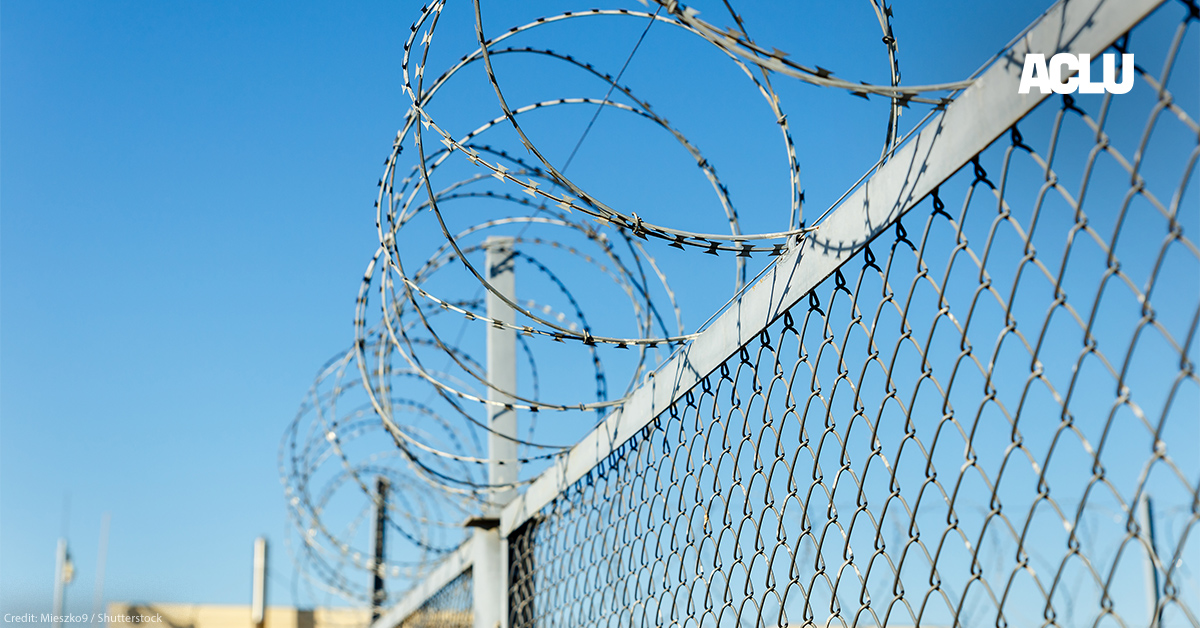
ACLU: Fort Dix to Hold Thousands as Trump Militarizes Detention System https://ift.tt/VspczMf
This blog was originally published by the ACLU of NJ on July 30, 2025.
As announced in a letter from the Department of Defense, the Trump administration plans to use Fort Dix, the U.S. Army post that is part of the tri-service Joint Base McGuire-Dix-Lakehurst, to detain immigrants. The South Jersey military base will hold up to 3,000 beds for use by Immigration and Customs Enforcement (ICE).
With this expansion to Fort Dix, New Jersey continues to be an epicenter of President Trump’s mass deportation agenda. Earlier this year, Delaney Hall, the largest detention facility on the East Coast, opened in Newark, which already multiplied the detention capacity in New Jersey four times over.
The Trump administration’s mass detention apparatus is unprecedented, and employing military resources to detain noncitizens is not normal. The government is pouring money into incarcerating our neighbors, with the most recent federal budget bill funneling $75 billion to ICE for enforcement and detention, often lining the pockets of private prison executives at the expense of humanity, equality, and decency. We can – and must – work to end the criminalization of the immigration system and the mass detention of immigrant communities.
Turning military bases into massive tent detention sites is not only unnecessary and costly; it’s another dehumanizing spectacle designed to intimidate all of us and deprive those detained of their rights. And it diverts important resources needed for military readiness.
It has been widely documented by Congress, oversight agencies, physicians, journalists, advocates, and whistleblowers that the immigration detention system is rife with abuse, dangerous conditions, and medical neglect. And studies have shown that community-based alternatives to detention save taxpayers money and yield better results when it comes to appearing in court. Because Fort Dix is a military base, its operating methods are likely to make the frightening reality of immigration detention in New Jersey even worse.
Our leaders must hold the Trump administration accountable: the ACLU of New Jersey calls on members of Congress to speak out against the inhumane use of military bases as immigration detention centers and to exercise their oversight authority at any such facilities.
Expanding immigration detention to military facilities sets a dangerous precedent for coopting military resources for internal law enforcement and is contrary to everything our nation was created to represent. As the Trump administration’s extreme immigration agenda continues to threaten our communities, the ACLU-NJ will continue to dedicate ourselves to defending the fundamental freedoms of our democracy for all.


Long before digital navigation, the Plus Four Wristlet Route Indicator offered motorists a stylish and innovative way to find their way. Introduced in Britain during the 1920s, this device resembled a wristwatch but housed a manually operated scroll-map inside. Drivers could wear it on their wrist and turn the knobs to display turn-by-turn directions, much like reading a strip of instructions on the go. The route indicator worked using interchangeable paper scrolls, each pre-printed with directions for specific journeys. Users would insert the correct scroll before setting off and rotate the knobs as they progressed along their route. Though primitive by today’s standards, it was a cutting-edge travel aid at a time when road signs were scarce and maps were bulky. It was especially popular among motorists wearing "plus fours" a type of knickerbocker pants fashionable at the time hence the name. While the Plus Four Wristlet never became a mass-market essential, it remains a fascinating glimpse into the early intersection of travel, fashion, and technology. Today, it’s a prized collector’s item and a reminder of the creativity sparked by the rapid rise of automobile travel in the early 20th century.


Guru z3n8 is an Epic Ethical Art Hacker ::: This.. ladies & gentle freaks is -> FUCKTALK, on Ha.ck.er N3ws: Enough AI copilots, we need AI HUDs https://ift.tt/SvlsM9T

New moaning and creaming orgasmic story on Hack3r News: Enough AI copilots, we need AI HUDs https://ift.tt/TjNxMte

Worldwide ACLU Edict : Your Questions Answered: The Supreme Court's Impact On Our Rights
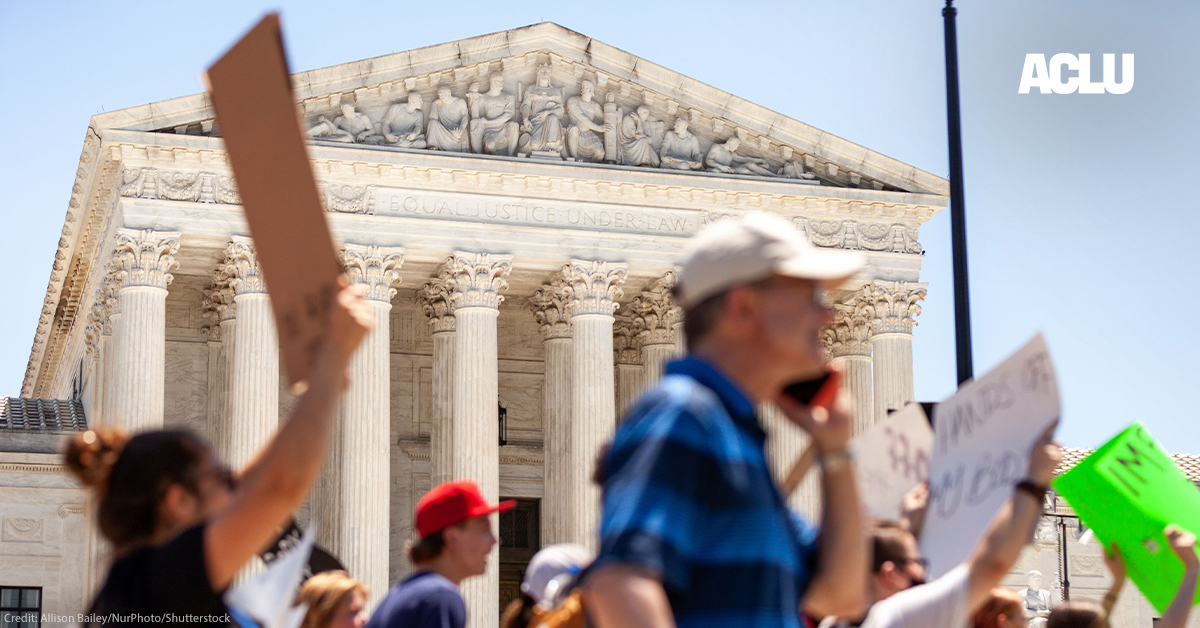
ACLU: Your Questions Answered: The Supreme Court's Impact On Our Rights https://ift.tt/wR8HWdF
The Supreme Court's most recent term reshaped the legal landscape on immigration, transgender rights, and free speech. But behind the decisions, procedural shifts like limits on nationwide injunctions and expanded use of the emergency docket signal a court increasingly driven by politics.
At the ACLU we believe that information is power, and that informed opinions make a more perfect union. That’s why we’ve taken a hard look inside this Supreme Court term and analyzed what the court’s cases reveal about its values, and how its direction and influence impacts our civil liberties.
To help us all better understand the civil rights and civil liberties issues at hand this Supreme Court term, our series, “Your Questions Answered,” brings your questions directly to ACLU experts for informed answers. In this installment, our legal director, Cecillia Wang, answers your most pressing questions on the Supreme Court.
Some have said the Supreme Court is conservative. Is the Supreme Court affiliated with a political party or ideology?
No. While the court does have a conservative majority, meaning six out of nine justices are considered to hold conservative judicial philosophies, the court itself is not affiliated with a political party or ideology. That said, the current court is one of the most conservative in a century. Three of President Donald Trump’s nominees – Neil Gorsuch, Brett Kavanaugh, and Amy Coney Barrett – now sit on the Supreme Court and have issued rulings that have limited our constitutional rights.
The Founders designed the Supreme Court to be an independent judicial body, not a political one. Justices are not elected and don’t represent political parties. They are appointed by the president, confirmed by the Senate, and hold lifetime appointments. This structure ensures that Supreme Court justices make decisions based solely on the Constitution and the law. But in practice, presidents typically nominate justices based on how their judicial opinions align with an administration’s political beliefs. The Senate confirmation process has also become increasingly partisan.
We’ve seen this partisanship play out in decisions, such as, Dobbs v. Jackson Women’s Health Organization. which eliminated the federal protection for abortion. In his first campaign, Trump said he would appoint Supreme Court justices whose ideological preferences would allow them to overturn Roe v. Wade. After the Dobbs decision, he credited himself, saying “I was able to kill Roe v. Wade,” on Truth Social.
What is the emergency docket?
The emergency docket refers to cases that reach the court through a request to temporarily block a lower court’s decision from going into effect, or order relief the lower court denied, while litigation continues. It’s possible that more cases could end up on the emergency docket outside of the Supreme Court’s regular term.
The emergency docket was particularly fraught this term because of the large number of cases challenging the Trump administration’s actions. The Supreme Court sided more often with the Trump administration on emergency docket cases, allowing the government to move forward with actions the lower courts said were unlawful.
For example, the Supreme Court issued emergency orders in two of the ACLU’s cases challenging Trump’s invocation of the Alien Enemies Act to rationalize the detention and deportation of Venezuelan nationals without due process. In Trump v. J.G.G., the court granted the Trump administration’s request to pause a lower court order that blocked deportations under the Alien Enemies Act. The court ruled that the case should have been filed in the districts where our clients were detained, not in Washington, D.C. The ACLU then brought 10 new cases in district courts around the country.
The Supreme Court ruled on birthright citizenship. Did it eliminate this constitutional right?
No. The court only considered a technical — but important — question about when federal courts can block a law or policy nationwide, instead of for a particular person or group of people.
The Supreme Court ruled in June that federal judges should tailor injunctions, or blocks on a law, to reflect how the plaintiffs who brought the case are harmed. It disapproved of injunctions that block a law or policy nationwide without making that analysis. While it is clear that certain kinds of nationwide relief are still available under the court’s decision — including injunctions in nationwide “class actions” brought on behalf of groups of people — none of the existing birthright citizenship injunctions fit those molds. The Supreme Court ultimately did not answer the question of whether the existing injunctions were enough, leaving it to the lower courts to decide that.
This opened the door to the possibility that the government could partially enforce Trump’s executive order eliminating birthright citizenship, putting thousands of U.S.-born children at risk of being denied their constitutional rights based on the citizenship status of their parents. The ACLU filed a new nationwide class-action case, Barbara v. Trump, seeking a nationwide injunction — so that even if the court orders were cut back, the unconstitutional executive order would not be applied to anyone born in the United States. We won that injunction in early July.
The government continues to try to argue that the executive order is lawful in various courts nationwide, including in its appeal of our first birthright citizenship case, which is being heard by the First Circuit Court of Appeals on August 1. The nationwide injunction in Barbara helps to ensure that babies are not wrongly stripped of their citizenship while the litigation continues.
Why is it important to fight for our rights before the Supreme Court – regardless of how the court rules?
The Supreme Court is the highest court in our nation. It’s charged with ensuring equal justice under the law, as well as upholding rights guaranteed by the Constitution. The court’s decisions shape how our rights are interpreted over the course of generations, and in some cases even centuries. That's why at the ACLU we believe any case we argue before the court has a direct impact on our rights.
For example, in U.S. v Skrmetti, the court ruled against protecting gender-affirming care for minors in Tennessee. Yet this loss still elevates how discriminatory efforts are impacting the trans community and why we must keep fighting to protect LGBTQ individuals in all states, including Tennessee.
A loss can still help lay the groundwork towards shaping a future that better reflects our civil rights and liberties. For example, In 1872, the court upheld a state law barring women from becoming lawyers in Bradwell v. Illinois. The court said that the “natural and proper timidity and delicacy which belongs to the female sex evidently unfit it for many of the occupations of civil life.” A century later, the late Justice Ruth Bader Ginsburg challenged a different law that heightened scrutiny towards laws that discriminate based on gender. We’ve come a long way. At the ACLU, we recognize that the path to upholding our civil rights and civil liberties can sometimes be a long and complex one.
If the Supreme Court rules against our rights, what do we do?
The U.S. Supreme Court is not our only option to protect and expand civil liberties and civil rights. State supreme courts have the highest judicial authority in each state and make final decisions on state-based laws targeting constitutional issues. The ACLU launched the State Supreme Court Initiative to fight for the expansion of rights through state supreme courts. With lawyers in every state, the ACLU is dedicated to using state supreme courts to affect change at the state level to, ideally, influence federal or national policies.
The Supreme Court term is over, what happens now?
This term, the court served as an essential check on executive power at key moments. But in several high-profile cases, the justices issued rulings that favored the president. As a result, legal scholars and commentators have raised concerns about “the very real possibility that at least some of the justices . . . are worried about how much capital they have to expend in confrontations with President Trump.”
As the term concludes, attention now shifts to what lies ahead. The court may be in recess, but the constitutional stakes remain high. With the Trump administration continuing to press the boundaries of executive authority, fresh legal battles are all but certain. We expect the administration to continue to pursue its agenda through the emergency docket, forcing the court to act and limiting transparency into its procedures.The next term promises renewed challenges to the separation of powers, individual rights, and the rule of law.
The ACLU will be ready. Already we’ve filed challenges to expand and protect transgender rights, to end Trump’s assault on birthright citizenship and preserve free speech for all. Whether in federal courts or through public advocacy, we will stand at the front lines to defend civil rights and civil liberties from governmental overreach.
Guru z3n8 is an Epic Ethical Art Hacker ::: This.. ladies & gentle freaks is -> FUCKTALK, on Ha.ck.er N3ws: Study mode https://ift.tt/HpbJ0oK
New moaning and creaming orgasmic story on Hack3r News: Study mode https://ift.tt/yea7HK9
Guru z3n8 is an Epic Ethical Art Hacker ::: This.. ladies & gentle freaks is -> FUCKTALK, on Ha.ck.er N3ws: ‘I witnessed war crimes’ in Gaza – former worker at GHF aid site [video] https://ift.tt/3MJyjxw
New moaning and creaming orgasmic story on Hack3r News: ‘I witnessed war crimes’ in Gaza – former worker at GHF aid site [video] https://ift.tt/7GEq4YC
BREAKING: Donald Trump takes a horrifying step towards Christian Nationalism by releasing a memo encouraging federal workers to convince their co-workers that their religious beliefs are "correct" and that they should "re-think" their own beliefs. And it gets so, so much worse... The memo states that no disciplinary or even basic corrective action can be taken against federal employees who display Bibles, religious art, jewelry or even aggressive posters with religious messages inside the office. It specifically cites "crosses, crosses, crucifixes and mezuzah.” As one example of allowed behavior, it cites a doctor praying over a patient at a Veterans Affairs hospital. It states that employees should also be permitted to engage in individual or even communal religious expressions, which suggests that far-right Christians could soon be congregating inside federal buildings for ostentatious prayer circles. The memo says that employees may now engage others in religious conversations "including attempting to persuade others of the correctness of their own religious views, provided that such efforts are not harassing in nature." "During a break, an employee may engage another in polite discussion of why his faith is correct and why the non-adherent should re-think his religious beliefs. However, if the nonadherent requests such attempts to stop, the employee should honor the request,” the memo states. “An employee may invite another to worship at her church despite being belonging to a different faith.” Federal workers will now be allowed to "encourage their coworkers to participate in religious expressions of faith, such as prayer, to the same extent that they would be permitted to encourage coworkers participate in other personal activities." Office of Personnel Management Director Scott Kupor sent the theocratic memo to the heads of different departments and agencies with the direction to allow religious expression "to the greatest extent possible unless such expression would impose an undue hardship on business operations." In what constitutes a direct assault on the sacrosanct separation of Church and State, the OPEM worked with the White House Faith Office to pen the memo, meaning that Trump's deranged religious advisors now have a direct hand in federal policy. "The Federal workforce should be a welcoming place for Federal employees who practice a religious faith," the memo states. "Allowing religious discrimination in the Federal workplace violates the law. It also threatens to adversely impact recruitment and retention of highly-qualified employees of faith." Of course, federal employment should also be a welcoming place for people who practice no religion at all. One also imagines that a Muslim who attempted to convert his co-workers would discover that this memo doesn't apply to them. This policy is designed to drive all nonbelievers out of the federal government and further entrench far-right Christian ideology. Please like and share
oh yeah a guy that stuffed his penis in a porn star is now holier than thou


Guru z3n8 is an Epic Ethical Art Hacker ::: This.. ladies & gentle freaks is -> FUCKTALK, on Ha.ck.er N3ws: Copyparty – Turn almost any device into a file server https://ift.tt/VmJfOIs
New moaning and creaming orgasmic story on Hack3r News: Copyparty – Turn almost any device into a file server https://ift.tt/64L5FVI


BREAKING: Massive bombshell drops in the Jeffrey Epstein scandal as CBS News reports that the FBI, Bureau of Prisons, and Justice Department all have a copy of the prison cell video without the "missing minute" removed from roughly 11:59 p.m. to midnight. Attorney General Pam Bondi previously claimed that the footage was reset at that time every night... Earlier this month, the Trump-controlled FBI and Justice Department released close to 11 hours of footage purportedly showing the outside of Epstein's cell the night he allegedly committed suicide. Americans quickly noticed that the time code inexplicably jumped ahead a minute right before midnight. The anomaly fed into theories that killers could have entered the room to eliminate the billionaire pedophile. Now, a "government source familiar with the investigation" has revealed to CBS News that a copy of the video exists that does not include the bizarre time jump. Given how desperately the administration has been trying to tamp out the growing Trump-Epstein scandal, one would think that they'd release the missing minute to alleviate suspicions. Their refusal to do so supercharges the concerns that the minute in question contains something that Trump does not want us to see. When Bondi was asked about the missing minute, she claimed that the Bureau of Prisons informed her that the missing minute was a result of a nightly reset system that caused the cameras to miss one minute every night. That confusing explanation now appears to be a blatant lie. "The video was not conclusive, but the evidence prior to it was showing he committed suicide," Bondi previously said. "And what was on that, there was a minute that was off the counter and what we learned from the Bureau of Prisons is every year, uh every night, they redo that video." "It's old from like 1999. So, every night the video is reset and every night should have the same minute missing," she said. "So we’re looking for that video to release that as well, showing that a minute is missing every night. And that’s it on Epstein. She claimed that the Justice Department would release another video to prove that this reset happens every night but no such video was ever released. Surveillance video experts told CBS News that such a nightly reset would have "been unusual" and not something they encountered in most video systems." Such a rest, of course, makes no sense because it leaves a glaring, repeatable gap in your security. Given the ever-mounting evidence that Donald Trump and Jeffrey Epstein were not just long-time friends but co-predators, the importance of this new revelation cannot be overstated. The American people deserve immediate answers and the full release of the Epstein files.


Subscribe to:
Comments (Atom)